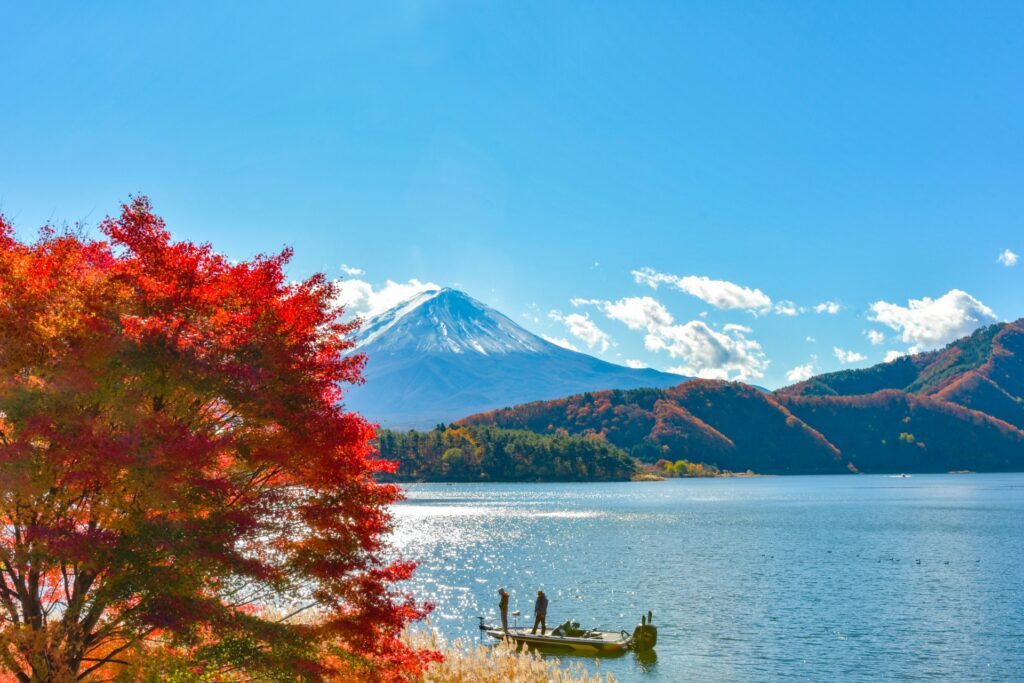
If asked to name one reason to visit Lake Kawaguchi, most people would answer Mount Fuji.
The mountain rising beyond the water is reason enough to come. Yet it would be a shame to reduce this part of Yamanashi Prefecture to a single photograph.
Flowers follow the seasons around the lakeshore. Trees turn from fresh green to red and gold. A pot of steaming hoto offers warmth after a long walk, while an old Sengen shrine reveals Mount Fuji not only as a beautiful mountain, but as one that people have revered for centuries.
Lake Kawaguchi has something to offer on clear days and cloudy ones. Instead of hurrying from one famous viewpoint to the next, stay for a night if you can, and give the lake and mountain time to change.
Lake Kawaguchi at a Glance
| Location | Fujikawaguchiko, Minamitsuru District, Yamanashi Prefecture. It lies west of Tokyo at the northern foot of Mount Fuji and is one of the Fuji Five Lakes. |
|---|---|
| Best for | Mount Fuji views, seasonal flowers, lakeside cycling, hot springs, gardens and small cultural museums |
| Time needed | One night and two days is ideal. For a day trip, choose either the northern or southern shore rather than trying to cover both. |
| Main areas | Oishi Park, Fuji Oishi Hana Terrace and the Music Forest Museum on the northern shore; Oike Park, the Herb Hall and Fuji Omuro Sengen Shrine on the southern shore |
| From Shinjuku | Around 100 minutes by highway bus, or as little as 1 hour 54 minutes on the limited express FUJI EXCURSION |
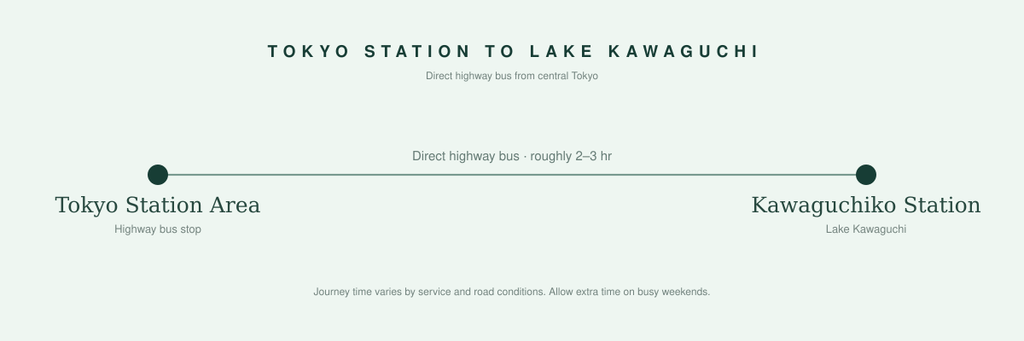
| From Tokyo Station | Direct highway buses take roughly 2–3 hours, depending on the service and traffic. |
| Getting around | Sightseeing bus, electric bicycle or taxi. Leave large luggage near the station or send it to your accommodation. |
| Best seasons | Spring for cherry blossoms and nemophila; summer for lavender and green kochia; autumn for foliage; winter for a better chance of crisp, snow-capped Fuji views |
| Good to know | Kawaguchiko Station and the sightseeing buses can become very crowded. Mount Fuji may remain hidden by clouds in any season. |
Lake Kawaguchi Through the Seasons
Lake Kawaguchi changes so completely through the year that it is difficult to name one season as the most beautiful.
Spring: Cherry Blossoms and Blue Nemophila
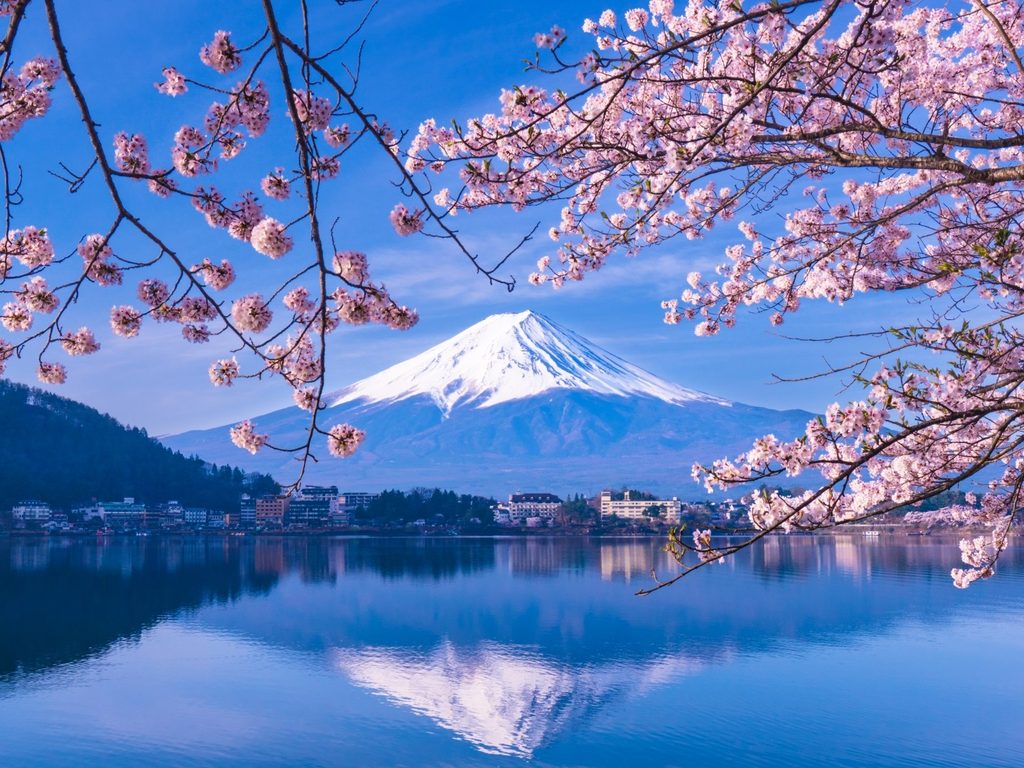
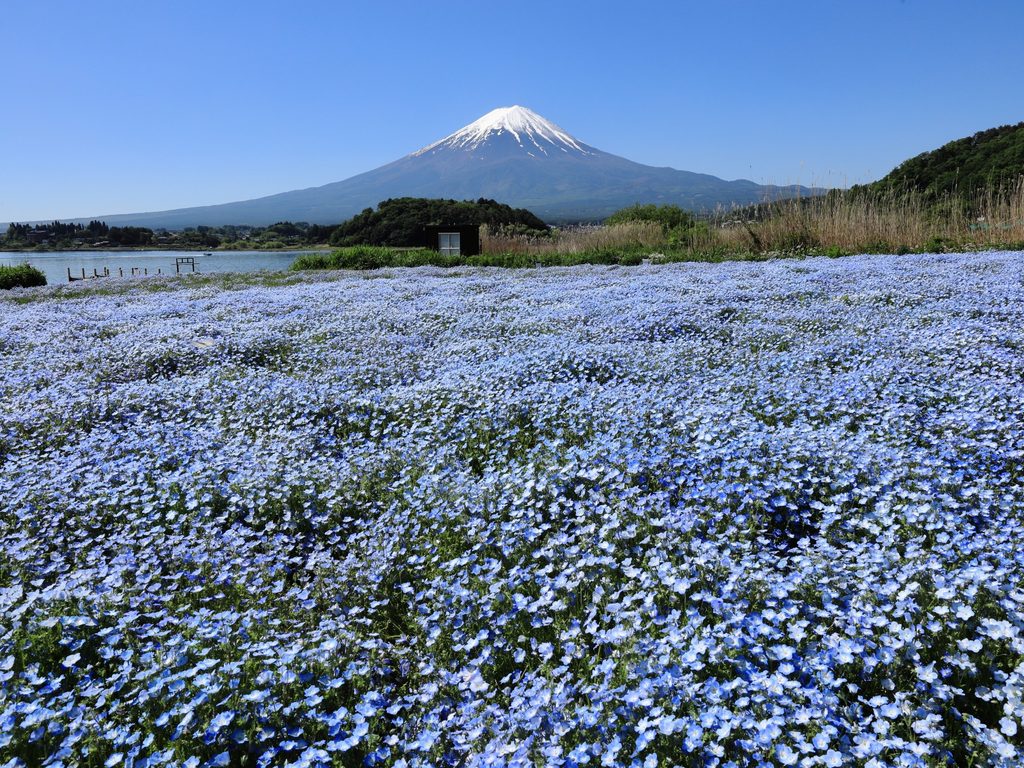
When the cherry trees along the lake bloom, their pale flowers meet a Mount Fuji that often still holds its winter snow. A little later in spring, small blue nemophila spread across Oishi Park, echoing the colors of the sky and water.
Cherry blossom season is understandably popular, but spring does not end when the petals fall. From late April into May, the next flowers quietly take their place along the shore.
Summer: Lavender and Soft Green Kochia
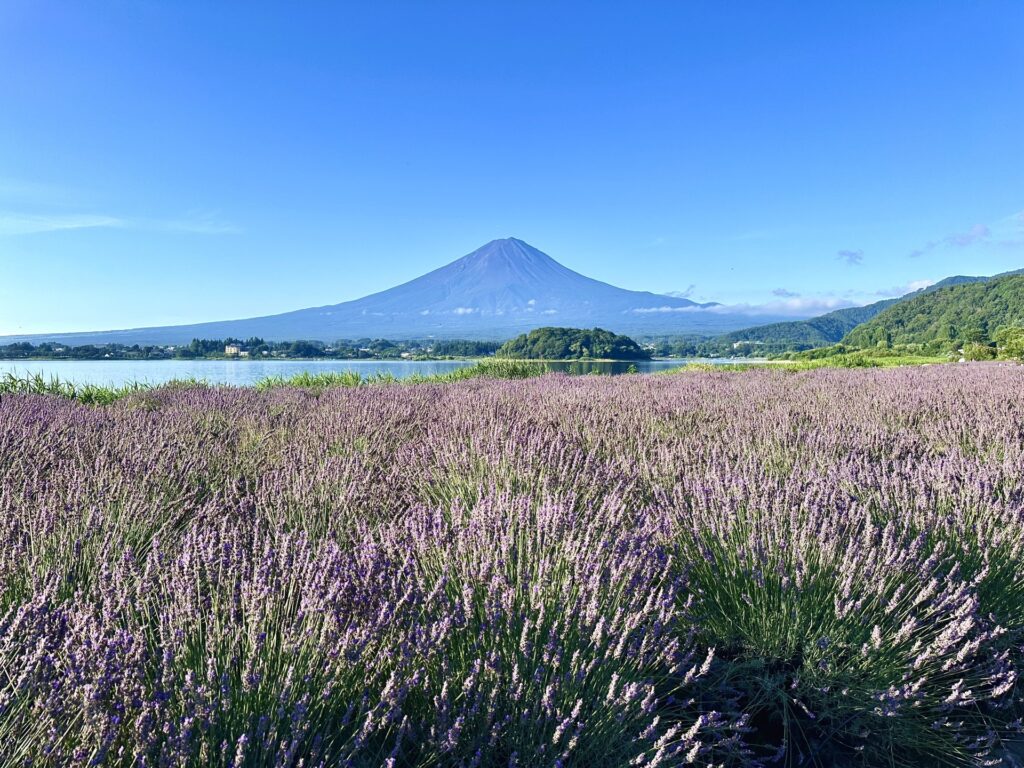
In early summer, lavender brings deep bands of purple to Oishi Park, usually reaching its best from late June to around mid-July. The annual Kawaguchiko Herb Festival ended after its 2025 edition, but the lavender itself remains part of the lakeside landscape.
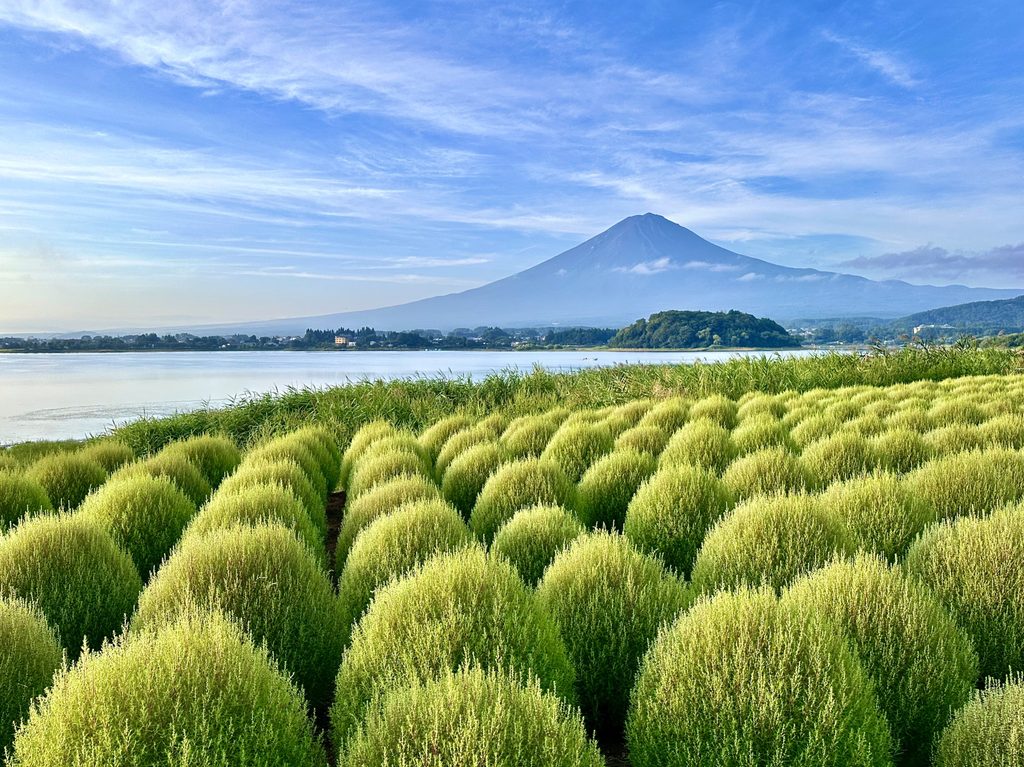
By August, rounded kochia bushes have grown into vivid green forms. Their scarlet autumn color is better known, yet the softer summer green has its own quiet brightness, especially beneath a cloudy sky.
Autumn: Red Kochia, Maples and Golden Poplars
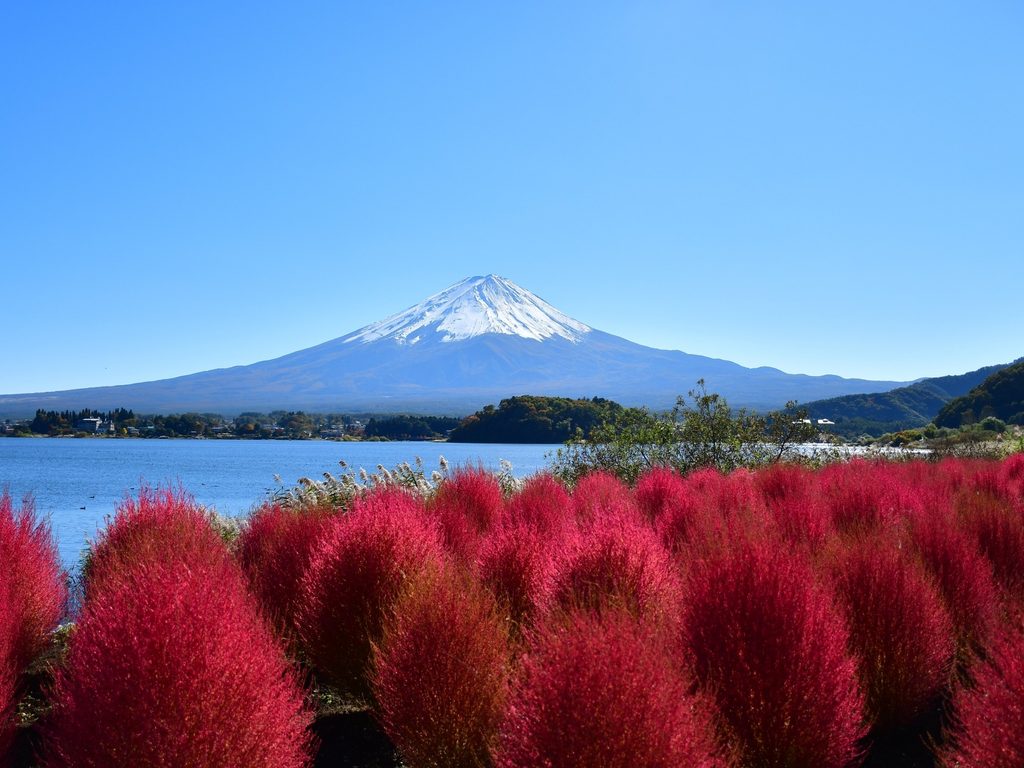
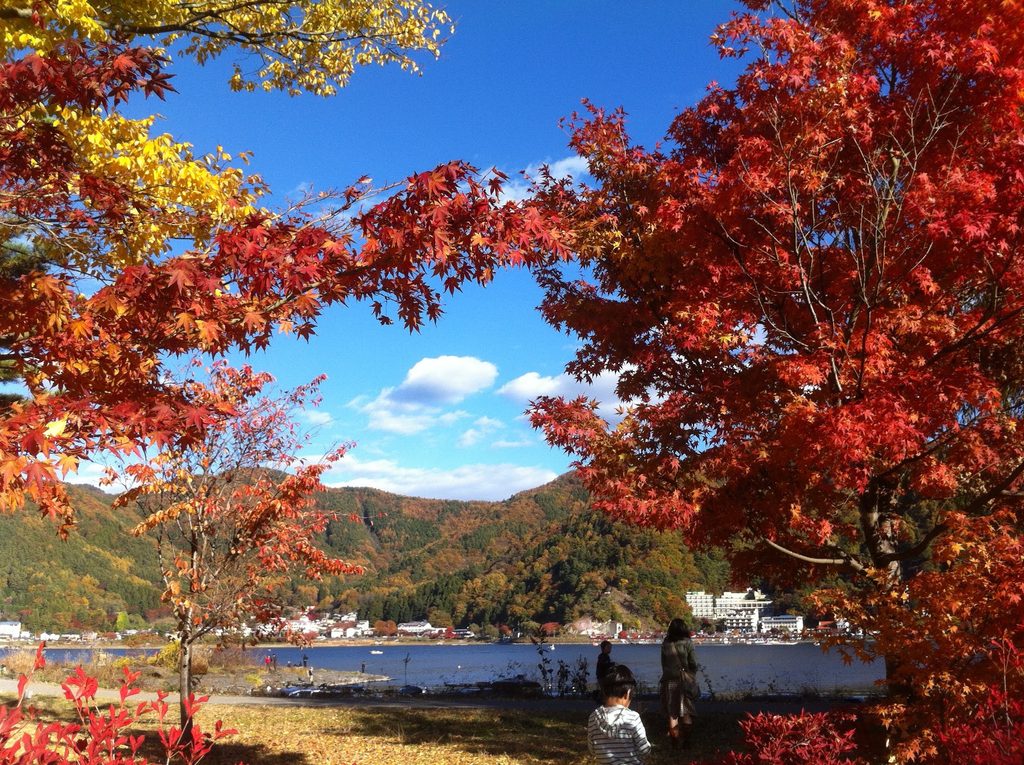
As autumn deepens, the kochia turns from green to red and the trees around the lake begin to follow. Rows of scarlet kochia with Mount Fuji behind them have become one of the season’s signature views.
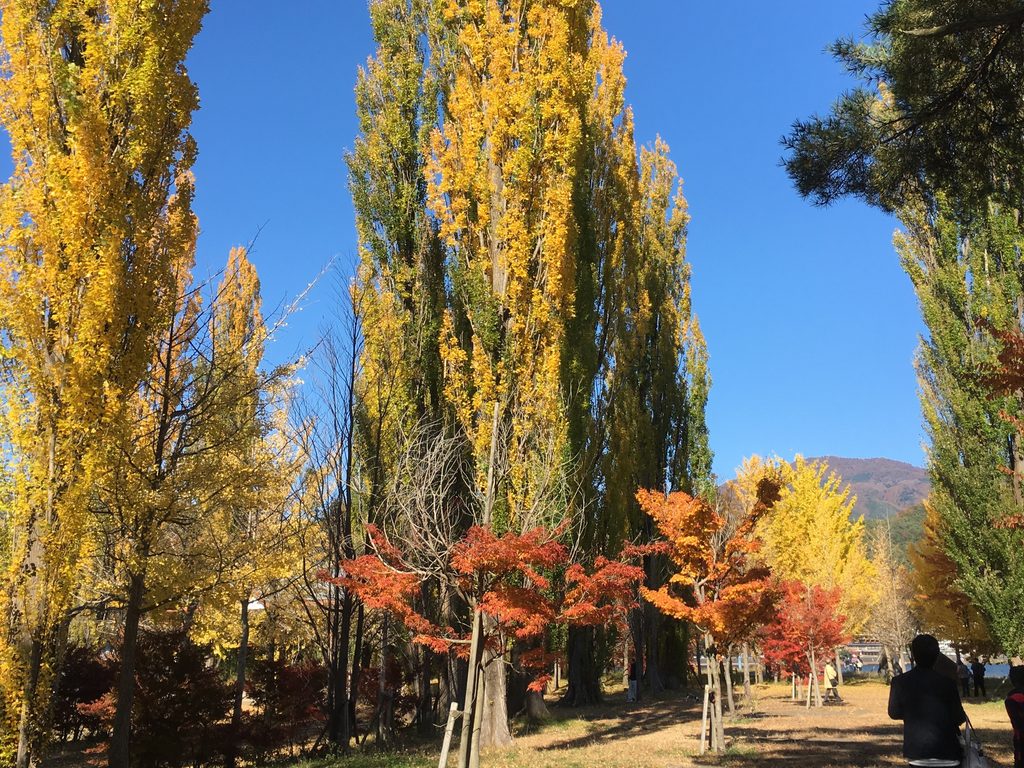
On the southern shore, the tall poplars of Oike Park turn gold. The scene is less theatrical than Oishi Park, but there is a lovely late-autumn stillness in walking beside the water as leaves gather underfoot.
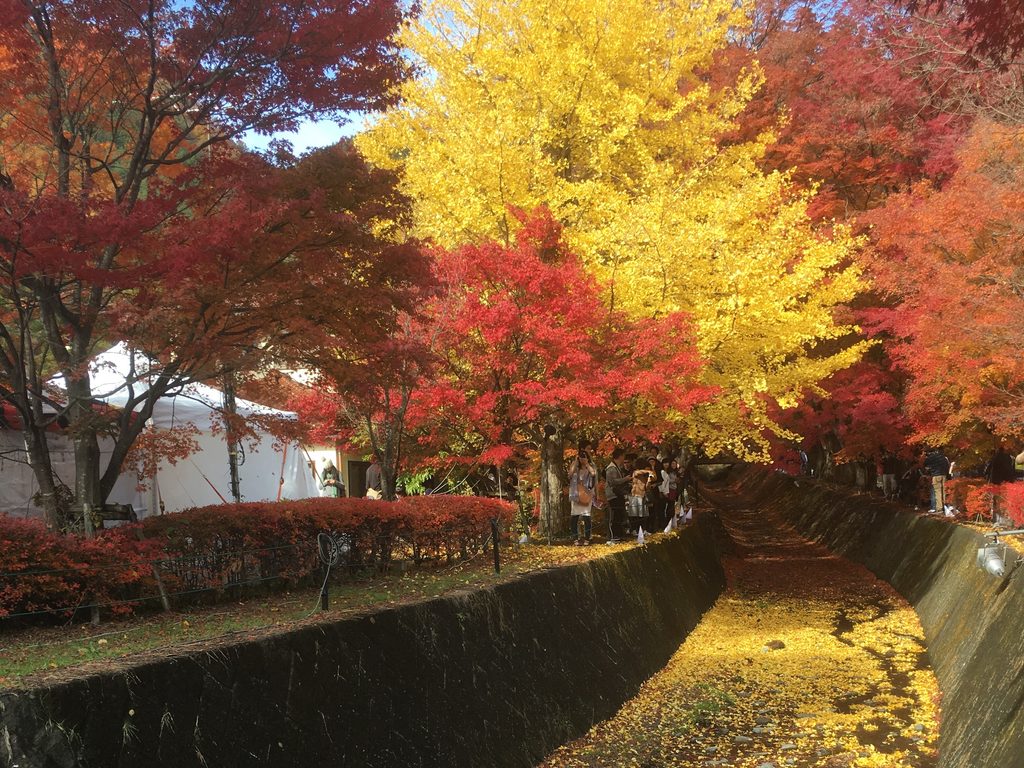
Autumn also brings the Fuji Kawaguchiko Autumn Leaves Festival to the Momiji Corridor on the northern shore. Visitors can walk beneath the maples and see them illuminated after dark. It is one of the best-known autumn events at the lake—and it becomes extremely busy. If you value a quieter atmosphere, avoid weekend afternoons, visit early on a weekday, or combine it with a less crowded lakeside scene such as Oike Park. Festival dates and illumination hours change each year, so check the current official information before traveling.
Official event information · Open the Momiji Corridor in Google Maps
Winter: A Clearer View of Mount Fuji
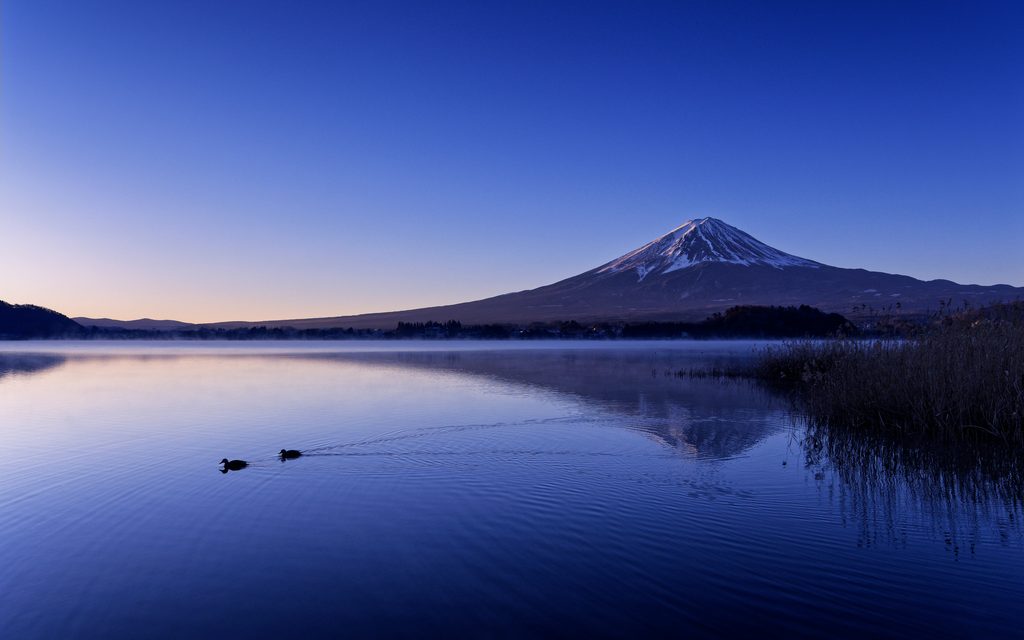
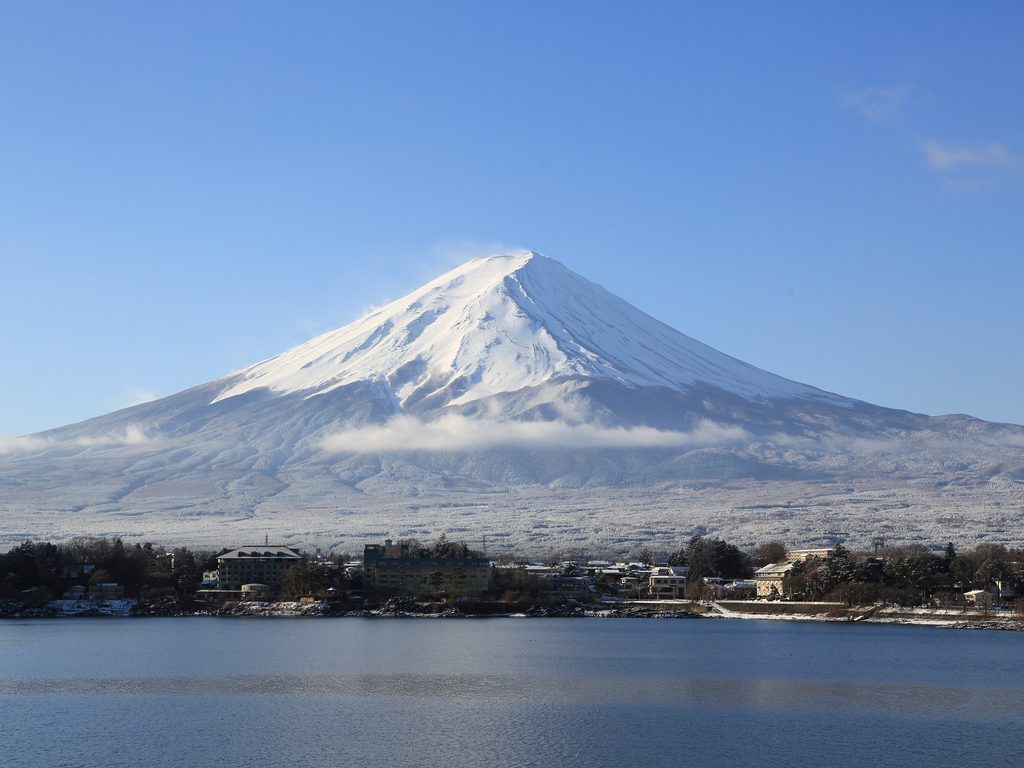
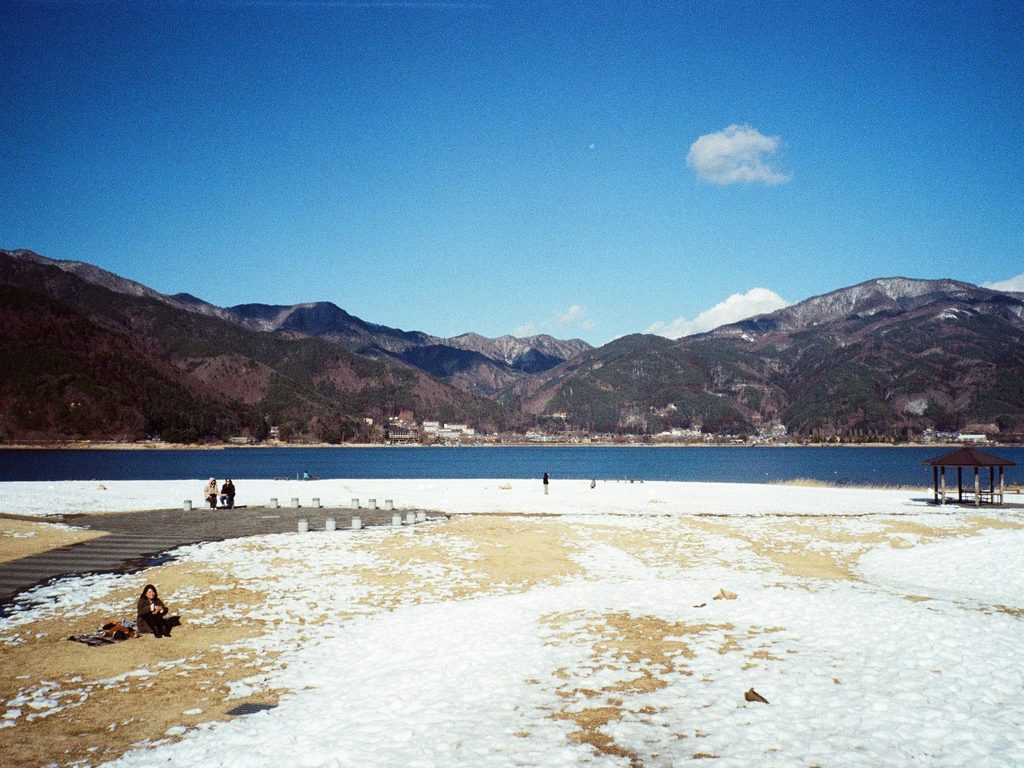
Winter removes much of the color from the lakeshore, but often rewards visitors with clearer air and a sharper outline of snow-covered Mount Fuji. Early mornings can be bitterly cold; the restrained beauty of a white mountain facing a quiet lake is unlike any other season.
Of course, Mount Fuji is never guaranteed. It may disappear behind clouds at any time of year. This is one reason an overnight stay matters: you can wait for the mountain twice, once in the evening and again the following morning.
Walk Slowly Along the Flower Road at Oishi Park
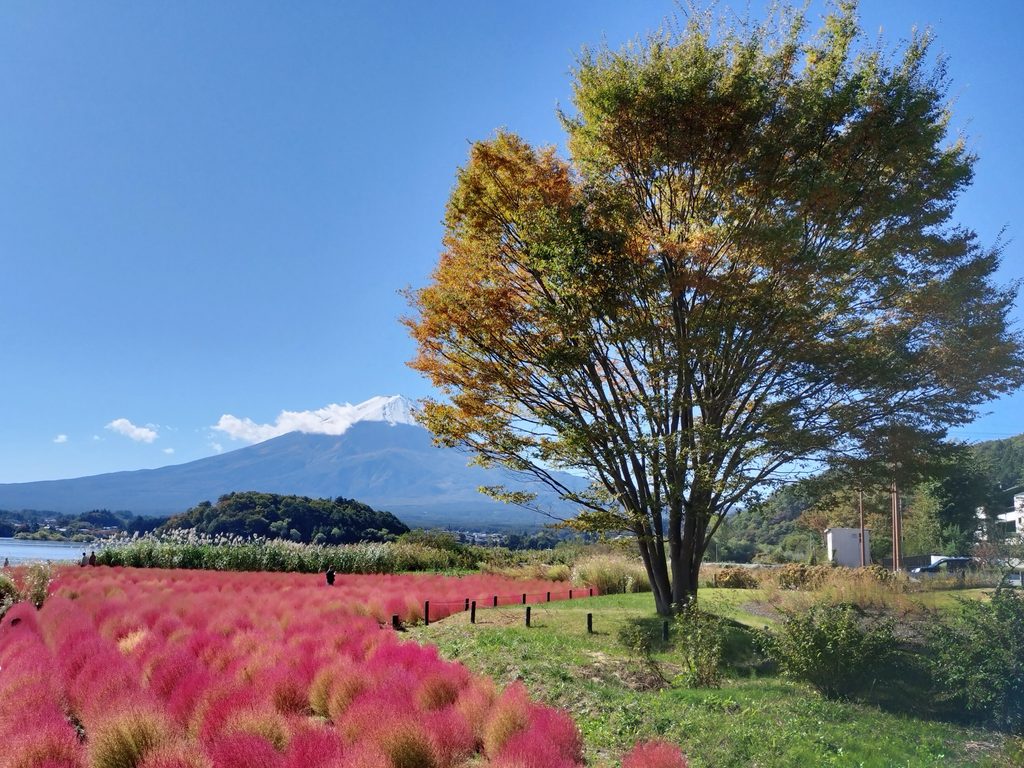
Oishi Park sits on the northern shore, where the lake, Mount Fuji and seasonal planting meet in one wide view. A flower road extends for about 350 350 meters beside the water. The park is free and always open.
It should not, however, be described as an undiscovered place. Cherry blossom, lavender and autumn foliage seasons bring many visitors, and buses and roads can become crowded on weekends. For a calmer walk, choose a weekday and arrive as early as you reasonably can. To visit before the public buses begin, stay on the northern shore or arrange a taxi.
Nor is the day a failure if the mountain is hidden. Walk the flower road, feel the breeze coming off the lake, and watch the clouds shift. Waiting for Fuji to appear is part of Lake Kawaguchi too.
Official website
Open Oishi Park in Google Maps
Linger Among Cafés and Small Shops at Fuji Oishi Hana Terrace
After Oishi Park, do not hurry straight back to the bus stop. Fuji Oishi Hana Terrace is directly beside it and deserves time of its own.
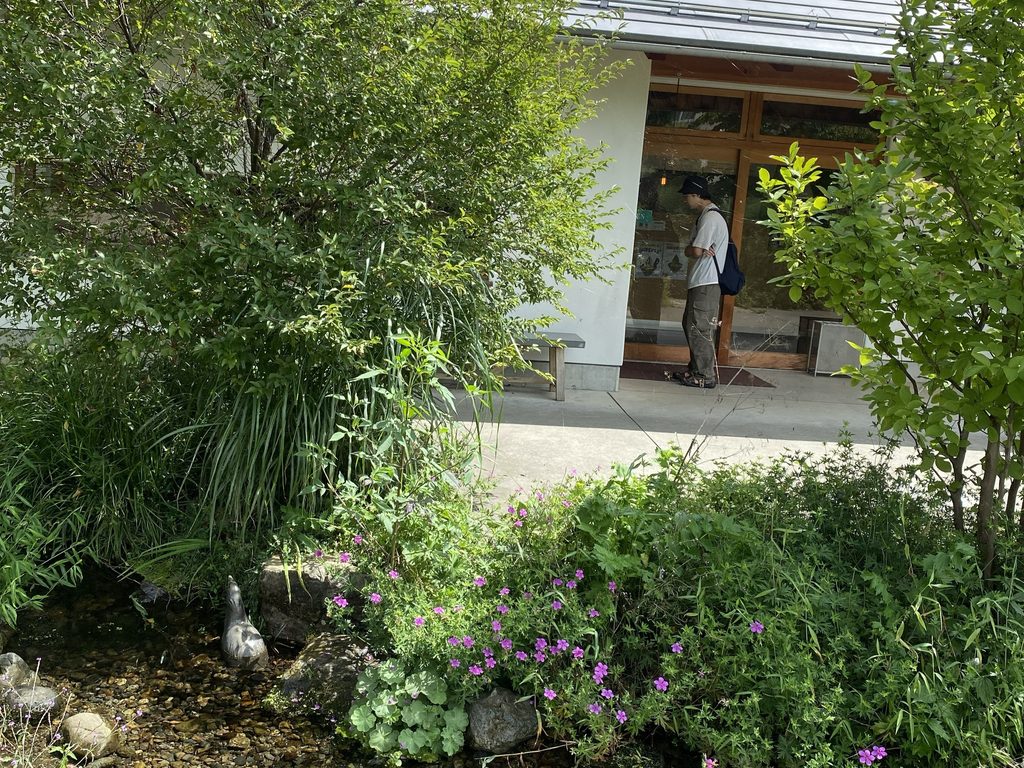
A small stream winds among trees and flowers, with white buildings scattered loosely around the garden. The shops do not stand in a single commercial row. Instead, cafés and small boutiques seem to appear one by one as you follow the paths, and this arrangement gives the terrace much of its charm.
You can pause at a stylish café or browse Japanese crafts and products connected with Yamanashi. There is no need to treat it as a shopping checklist. Listen to the water, wander through the planting, and enter one place that catches your eye. Oishi Park gives you the grand landscape of Fuji and the lake; Hana Terrace draws your attention back to plants, water and small architectural details.
Opening days and hours differ by shop, and tenants may change. If you hope to visit a particular business, check the latest directory before you go.
Official website · Open Fuji Oishi Hana Terrace in Google Maps
A Small Detour on the Southern Shore
Back on the southern shore, stop at Kawaguchiko Herb Hall and Oike Park across the road.
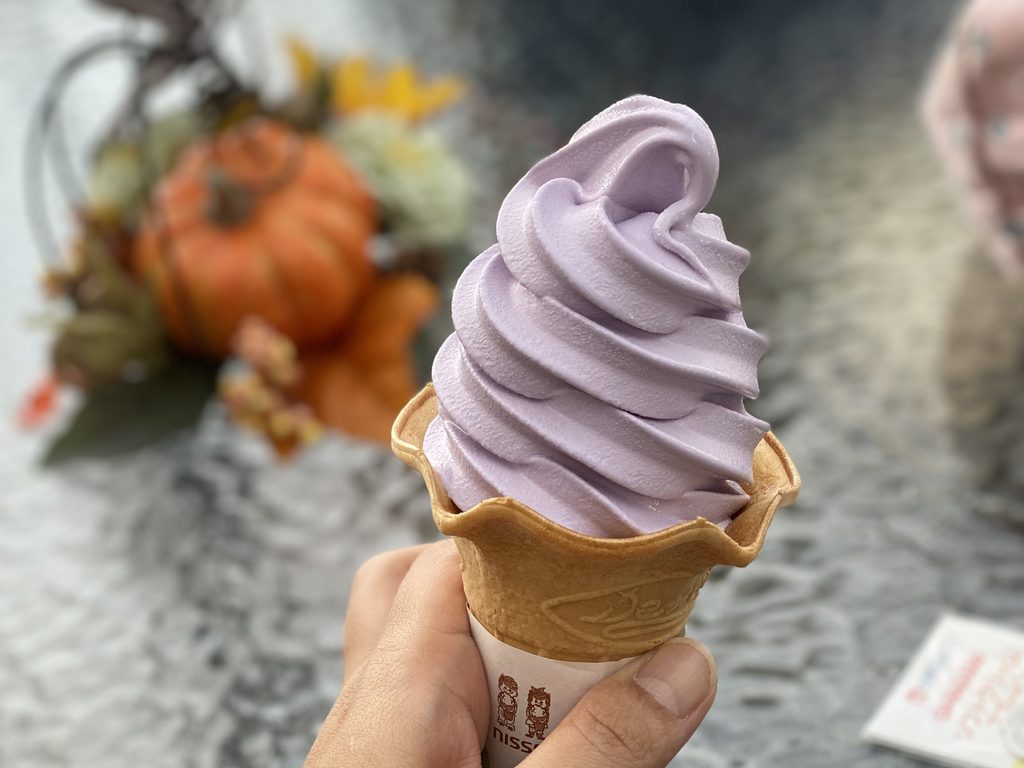
The Herb Hall is less a major attraction than a pleasant place to pause during a lakeside walk. You can browse herb products and try its lavender soft-serve ice cream. The sales location and opening hours can change with the season or weather, so check the official notice on the day of your visit.
Kawaguchiko Herb Hall official website · Open in Google Maps
The Yamanashi Gem Museum is also close by. Yamanashi has deep ties to crystal cutting and jewelry, and the museum displays gemstones, raw minerals and finished pieces from around the world, including an enormous quartz crystal. It is an easy addition on a rainy day or when Fuji is hidden, and it can be combined with the Herb Hall and Oike Park without a difficult journey.
Yamanashi Gem Museum official website · Open in Google Maps
The poplars in Oike Park were planted in 1963. In autumn their leaves turn gold, falling around the path whenever the wind rises. This is not the monumental landscape of Mount Fuji, but a gentler scene that feels closer to everyday life beside the lake.
Oike Park official information · Open in Google Maps
Hoto, Karaage and a Glass of Koshu Wine
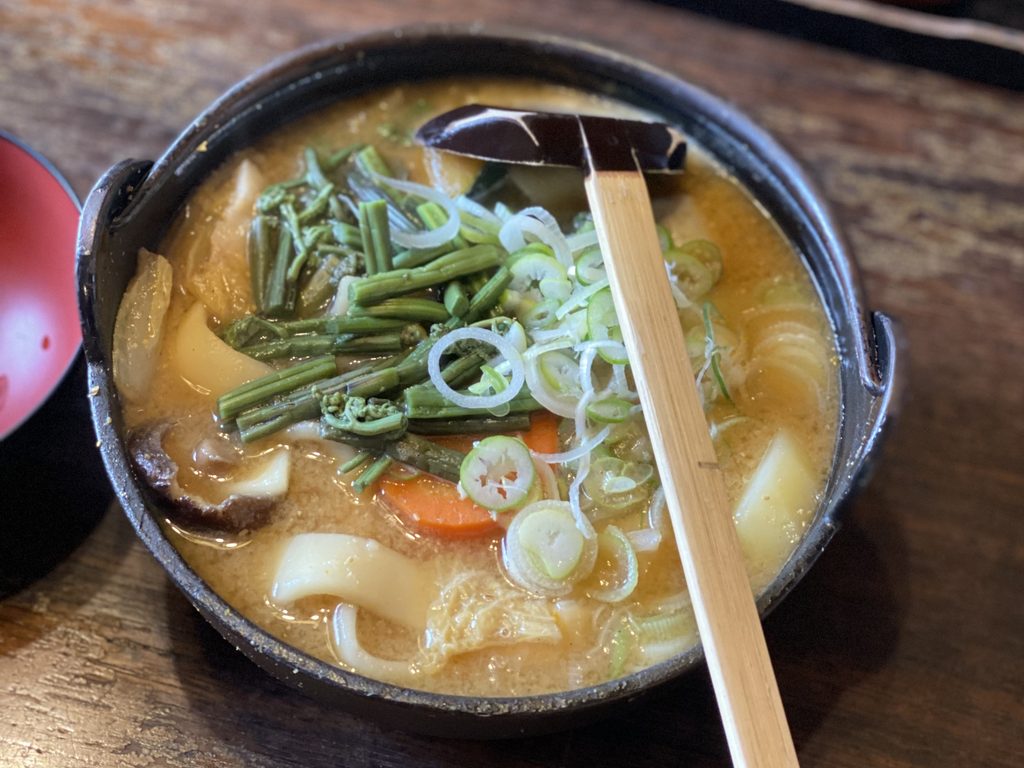
The local dish to eat around Lake Kawaguchi is hoto: broad wheat noodles simmered with pumpkin and other vegetables in a miso-based broth. At Kosaku Kawaguchiko, it arrives still bubbling in a heavy iron pot.
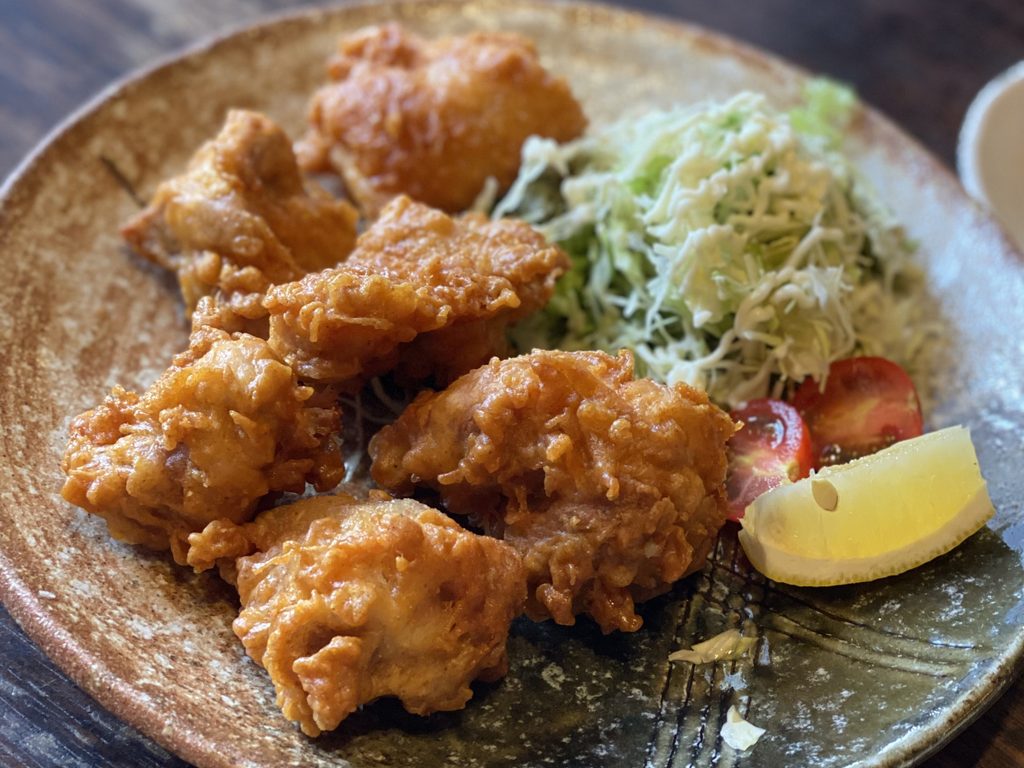
When I visited, the hoto was not the only memorable dish. The karaage had a fragrant, crisp coating and was surprisingly juicy inside. Add a glass of Koshu wine and lunch feels less like a hurried stop in a sightseeing town and more like time spent around a Yamanashi table.
Menus and availability can change, so check the day’s menu if the karaage or wine is important to you. The standard pumpkin and mushroom hoto also uses fish stock and should not be presented as vegetarian. If you have dietary restrictions, ask the restaurant before ordering.
Kosaku does not generally accept reservations, and guests are seated in arrival order. There may be a wait at lunchtime on weekends; eating a little earlier or later will make the rest of the day easier to plan.
Kosaku Kawaguchiko official website · Open in Google Maps
| What to try | Pumpkin hoto, karaage and Koshu wine |
|---|---|
| Budget | Varies by order; check the current menu and prices before visiting |
| Location | About 1.2 km from Kawaguchiko Station; within walking distance of the sightseeing bus stop Yakuba Iriguchi |
| Hours | Usually 11:00 a.m.–8:00 p.m., last order 7:30 p.m. Check the official site for temporary closures. |
| Reservations | Generally not accepted; guests are seated in arrival order |
| Payment | Cash and major credit cards; QR-code payments are not accepted |
A Lakeside Shrine and the Memory of Mount Fuji
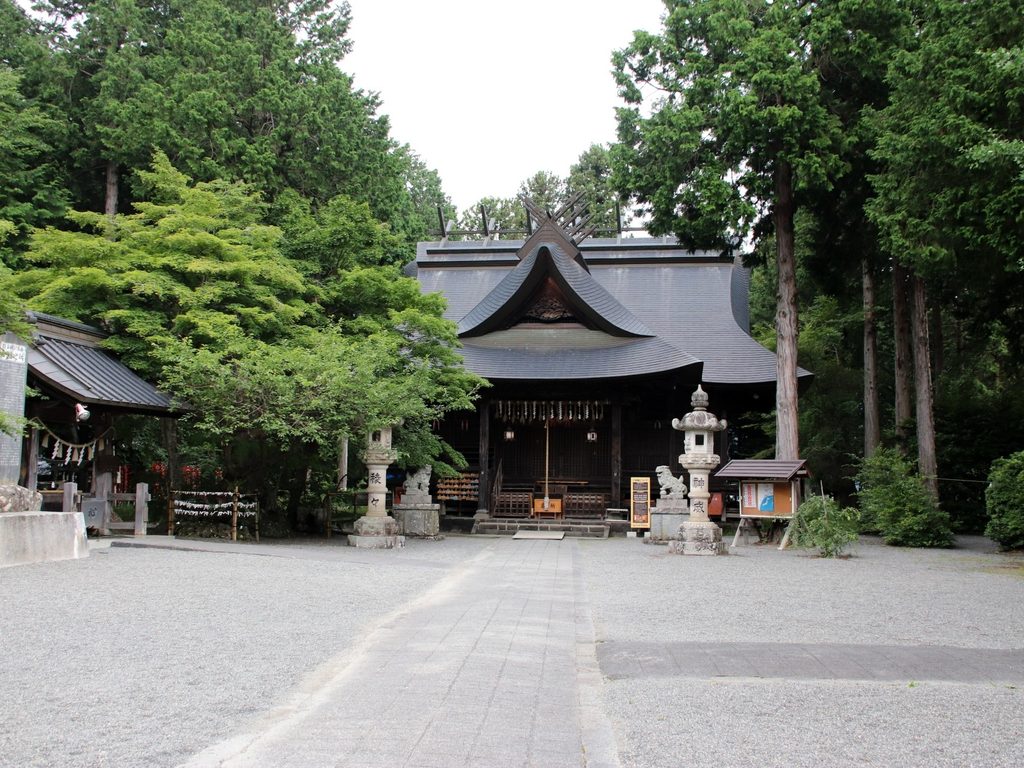
Continue west along the southern shore and you will reach Fuji Omuro Sengen Shrine. It lies across the lake from Oishi Park and fits naturally after Oike Park or the Herb Hall. After the brighter attractions by the water, entering its tree-filled grounds changes the pace of the day.
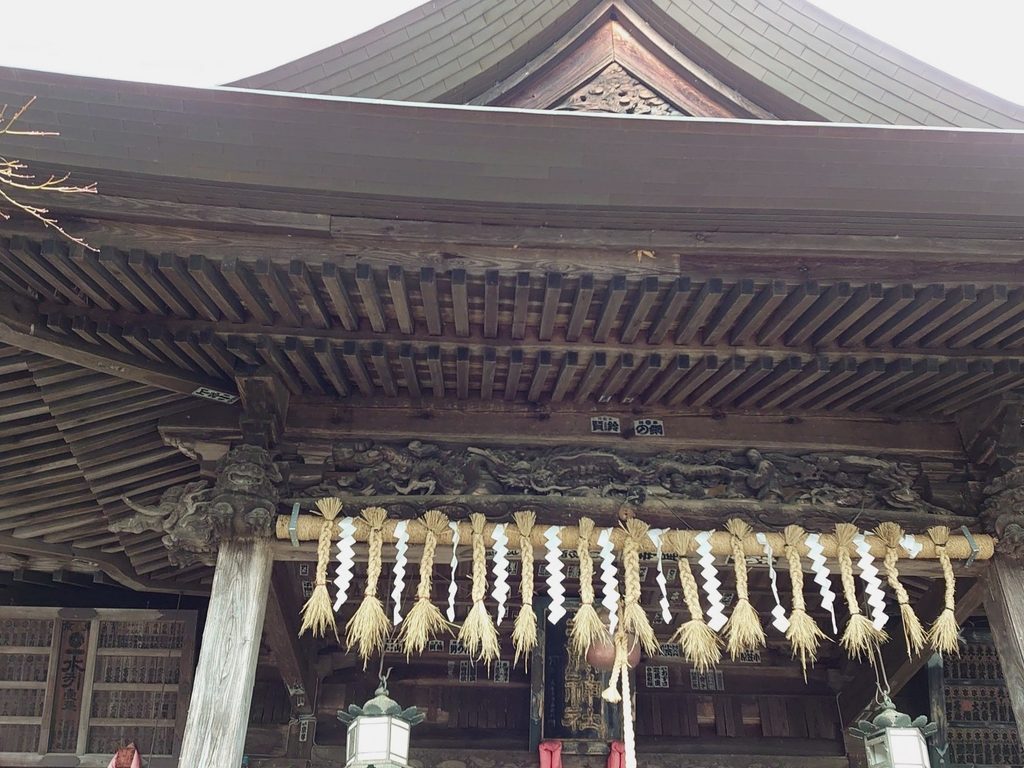
The shrine is one of the component sites of the UNESCO World Heritage property Fujisan, Sacred Place and Source of Artistic Inspiration. Its main sanctuary once stood at Mount Fuji’s second station and was later moved to the shrine’s present lakeside grounds. Here, beside the water, you can stand before a building that received prayers on the mountain itself.
Seeing Fuji as a sacred mountain—not only a flawless photographic subject—changes the view across the lake. The shrine offers a way to encounter that history of belief without leaving the Lake Kawaguchi landscape.
Fuji Omuro Sengen Shrine official website · Open in Google Maps
By public transportation, take the Green Line sightseeing bus toward Lake Saiko from Kawaguchiko Station. If time and weather allow, however, I recommend approaching from the Herb Hall on foot or by bicycle.
I walked this route in autumn. A quiet road with relatively little traffic followed the lake, and I could smell the fallen leaves as I went. It did not feel like a transfer between two sights. The walk itself became one of the best ways to experience the quieter side of Lake Kawaguchi.
There were many cyclists on the same road, and the route works equally well after leaving your luggage and renting a bicycle. Walking lets you notice slow changes in the trees and water; a bicycle links the southern-shore stops with little strain. Check the weather, sunset time and bicycle return deadline, then choose the pace that suits you.
A Practical One-Night Itinerary
Day One: The Southern Shore
| Approximate time | Plan |
|---|---|
| 11:30 | Arrive at Lake Kawaguchi. Leave your luggage at your accommodation or a service near the station. Rent a bicycle now if you plan to use one. |
| 12:30 | Walk through Oike Park and visit Kawaguchiko Herb Hall. Pause for lavender soft-serve. |
| 14:00 | Choose the Yamanashi Gem Museum, or follow the quiet lakeside road from the Herb Hall to Fuji Omuro Sengen Shrine on foot or by bicycle. There is no need to rush through both. |
| 16:00 | Check in. Enjoy the lakeshore at dusk or spend time in the onsen. |
| Around 17:30 | Eat an early dinner at Kosaku, or dine at your accommodation. Try hoto, karaage and Koshu wine. |
These times are only a guide. Adjust the order around your accommodation’s dinner time, bicycle returns and museum closing days.
Day Two: The Northern Shore
| Approximate time | Plan |
|---|---|
| Early morning | Go to Oishi Park. If you stay on the northern shore, it is easier to walk beside the lake before the sightseeing buses become busy. |
| 9:30 | Take your time on the flower road. Even if Fuji is hidden, watch the clouds and enjoy the seasonal plants. |
| 10:30 | Continue to Fuji Oishi Hana Terrace. Follow the stream through the garden and choose one café or shop. |
| 11:30 | Visit the Kawaguchiko Music Forest Museum for its garden, antique music boxes and automatic musical instruments. |
| Early afternoon | In autumn, consider the Momiji Corridor after checking the crowds. In other seasons, allow more unhurried time at the museum. |
| Before leaving | Collect your luggage and return to Kawaguchiko Station with extra time for traffic and bus delays. |
If rain or clouds hides Mount Fuji, there is no need to wait all day in a park. Give your time to the shrine, Herb Hall, museums or a bowl of hoto, then return to the water if the sky begins to change.
Getting There and Traveling with Luggage
From Shinjuku
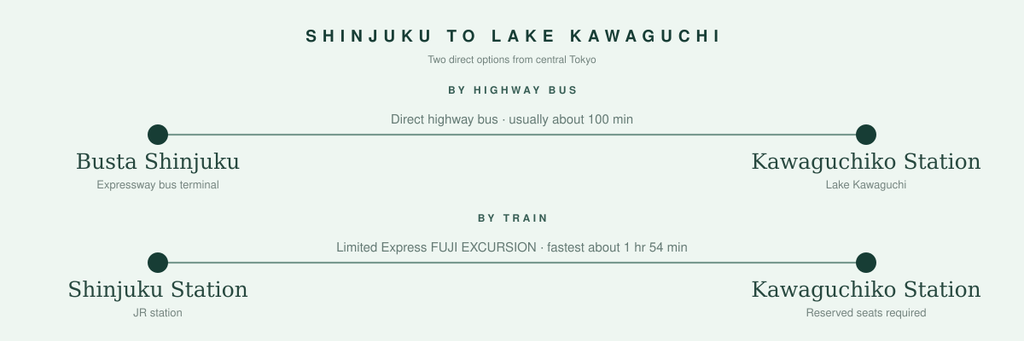
From Shinjuku, a direct highway bus usually takes around 100 minutes. The limited express FUJI EXCURSION can complete the journey in as little as 1 hour 54 minutes. The bus is simple and requires no transfer, but weekend and autumn traffic can cause substantial delays. The FUJI EXCURSION is reserved-seat only and may sell out early at busy times. Always check the operating company for the timetable and fare on your travel date.
From Tokyo Station
Direct highway buses also run from the Tokyo Station area to Kawaguchiko Station. Journey times differ by service and road conditions, so allow roughly two to three hours. The lack of a transfer is convenient, but congestion on the expressway can delay arrival. Leave generous space in your schedule on weekends and at the height of the flower and foliage seasons.
Getting Around the Lake
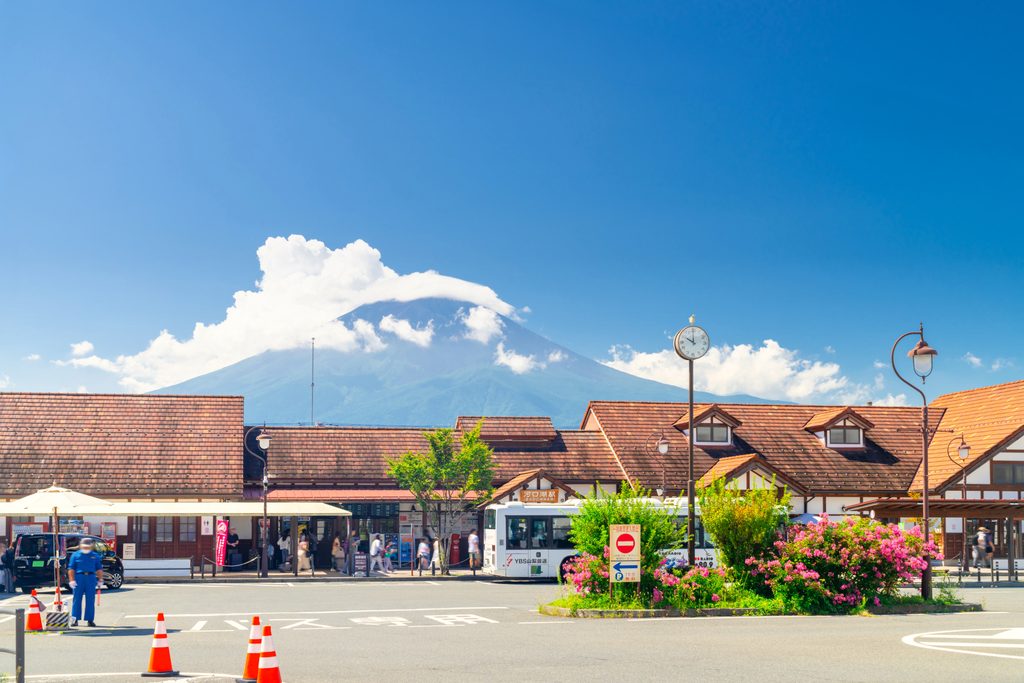
The Red Line sightseeing bus takes about 30 minutes from Kawaguchiko Station to Oishi Park. Get off at Kawaguchiko Natural Living Center (Oishi Park). At popular times, buses can be full or delayed, so leave enough flexibility in your schedule to wait for the next departure.
The area around Kawaguchiko Station can be extremely crowded with international visitors and people waiting for buses. Your first impression may not resemble the image suggested by the name A Quieter Japan. Yet as you move away from the station toward the shore, the crowds begin to thin. Water, mountains and quieter stretches of road return. Do not judge the entire lake by the station forecourt.
One alternative to repeatedly boarding crowded buses is to leave your luggage and rent a bicycle. Electric-assist bicycles are available near the station, making Oike Park, the Herb Hall and shorter sections of the southern shore easy to explore at your own pace. You are free to stop when a view catches you rather than watching a timetable.
A complete circuit of the lake is about 20 20 kilometers, however, and some roads carry more traffic than others. Check the weather, your energy, sunset and the rental return time. Choose a few places rather than treating a full lap as an obligation. Bicycles may also sell out during busy periods, so confirm the rental conditions in advance.
Day visitors with large suitcases can use staffed luggage storage at Fuji Kanko Travel, about two minutes from the station. It normally closes at 5:30 p.m., so remember the collection time.
Official luggage-storage information · Open in Google Maps
For overnight guests, Fujiyama Luggage Delivery carries bags between Kawaguchiko Station and participating accommodation. Same-day station drop-off is currently from 10:00 a.m. to 1:00 p.m. and costs ¥2,000 one way per item. Not every property participates, and size conditions apply, so check the current details before relying on it.
Official delivery information · Open Kawaguchiko Station in Google Maps
Where to Stay at Lake Kawaguchi
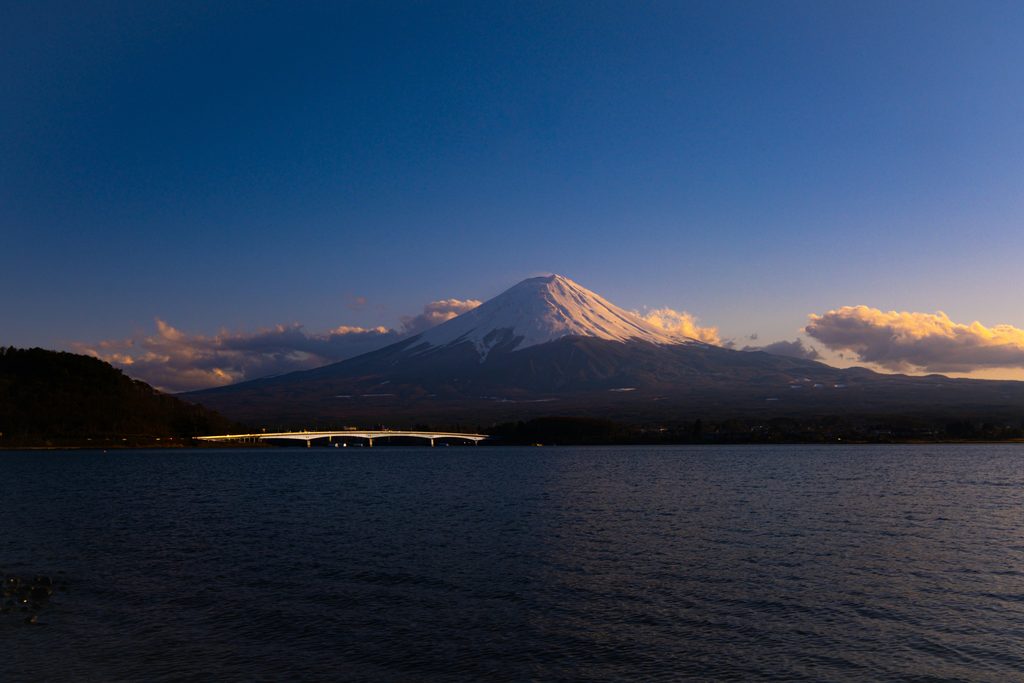
Lake Kawaguchi can be visited as a day trip from Tokyo. Even so, for A Quieter Japan, I recommend staying for one night.
This is not because you need to collect one more attraction. Stay to see the water after day-trippers begin to leave, to wait for Fuji before the morning clouds gather, and to enter an onsen without watching the clock. That margin turns Lake Kawaguchi from a place where you photographed Mount Fuji into somewhere you remember inhabiting, however briefly.
The northern shore suits travelers who prioritize early-morning walks and views of Mount Fuji. The southern shore offers properties with easier station access and a wider range of practical hotels. When booking, look beyond price: confirm the exact room view, dinner arrangements, station shuttle and luggage storage. A room described only as “lake side” does not necessarily face Mount Fuji.
For a Special Stay with a Fuji View: Ubuya
Ubuya is an onsen ryokan on the northern shore. According to the property, every guest room faces Mount Fuji, making time at the inn a central part of the journey rather than simply the night between two sightseeing days. Meal arrangements and room facilities vary by plan, so check the room category when booking. It is an expensive option, but particularly well suited to watching the lake change from evening to morning.
Official website · Open Ubuya in Google Maps
For Lakefront Comfort and Easier Transport: Fuji Lake Hotel
Fuji Lake Hotel stands beside the water within walking distance of Kawaguchiko Station and also offers a station shuttle. It has hot-spring facilities, while Fuji-facing and lake-facing rooms offer different views. It is a practical choice for travelers who want to leave their bags and explore the southern shore without giving up the atmosphere of a lakeside stay.
Official website · Open Fuji Lake Hotel in Google Maps
For a More Practical Budget: Toyoko Inn Fuji Kawaguchiko Ohashi
Toyoko Inn Fuji Kawaguchiko Ohashi is close to Oike Park and the Herb Hall on the southern shore. A station shuttle and included breakfast make it a useful candidate for travellers who want the freedom of an overnight stay without paying for a traditional resort experience. It is not the best choice for an onsen-ryokan atmosphere or a guaranteed view from the room, but it works well as a base for the southern shore.
Official website · Open in Google Maps
| Hotel | Best for | Area | Check before booking |
|---|---|---|---|
| Ubuya | A special stay centred on Mount Fuji views and onsen time | Northern shore | Meal plan, room facilities and transport from the station |
| Fuji Lake Hotel | Balancing lakeside atmosphere with easier transport | Eastern part of the southern shore | Fuji-facing or lake-facing room, shuttle times and meal plan |
| Toyoko Inn Fuji Kawaguchiko Ohashi | A more practical, relatively affordable overnight base | Southern shore | Station shuttle, luggage storage and the actual room view |
An overnight stay also gives you room for one or two nearby cultural stops. On the southern shore, choose the Yamanashi Gem Museum; on the northern shore, consider the Kawaguchiko Music Forest Museum, once widely known as the Music Box Forest. Its antique music boxes, automatic musical instruments, gardens and architecture offer a different side of the area. Neither museum needs to be treated merely as shelter from the rain. Each adds another layer to a landscape-led journey.
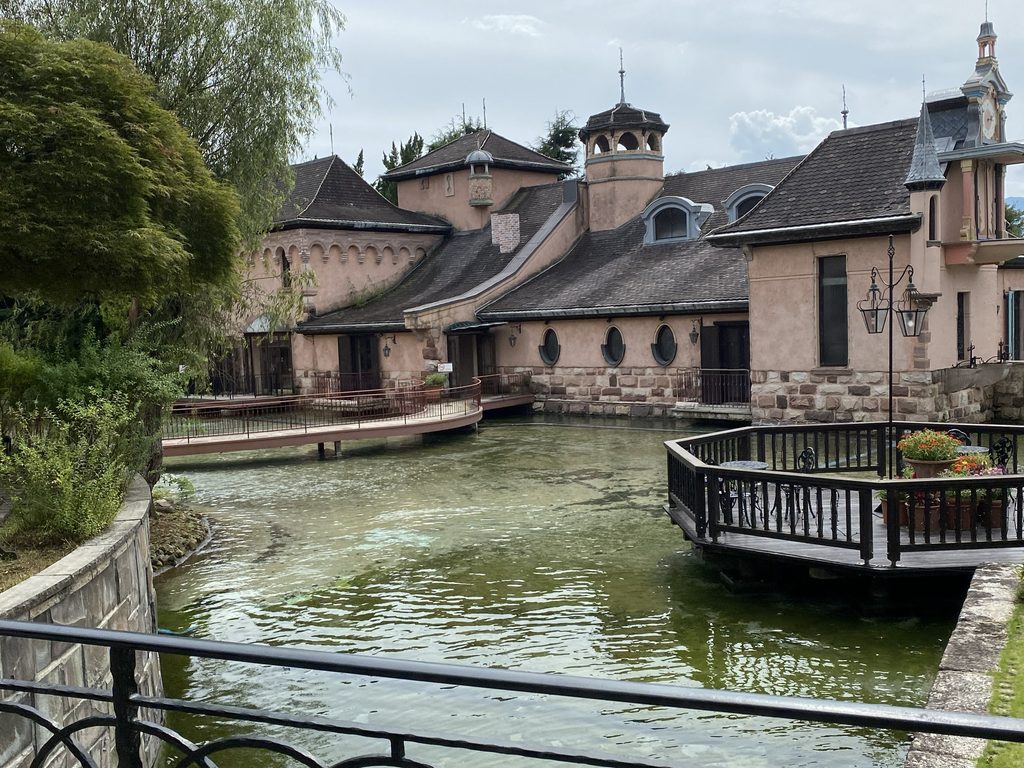
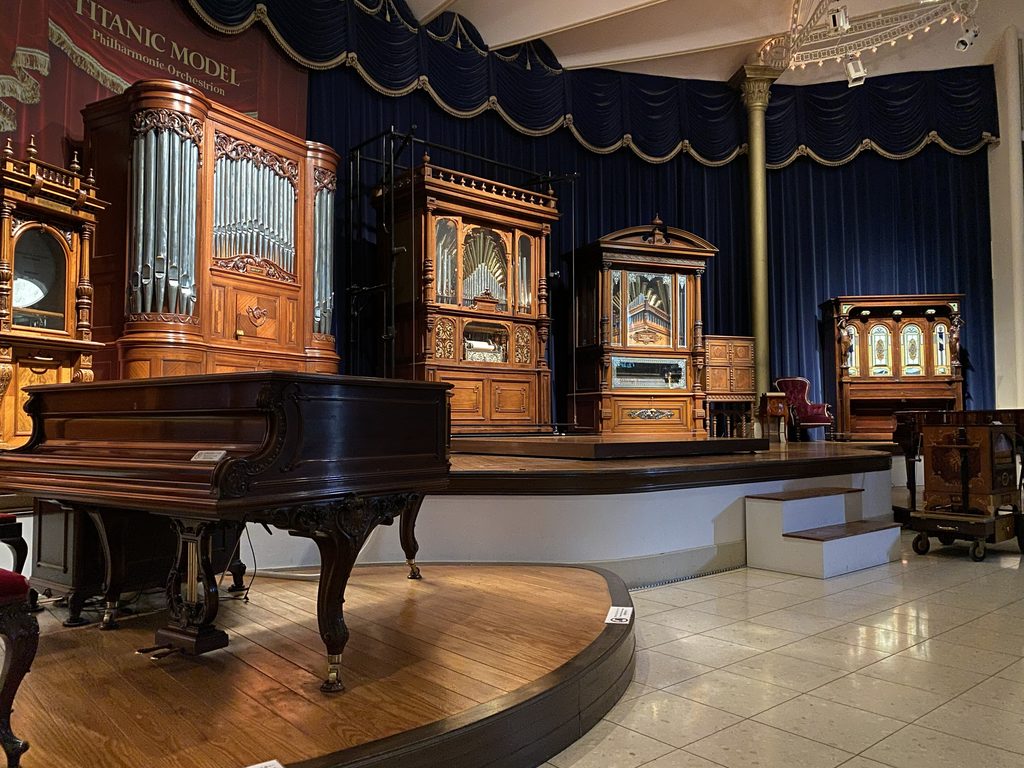
Kawaguchiko Music Forest Museum official website · Open in Google Maps
There is no need to fit in everything. Choose one according to the weather and your own curiosity; that is enough for this trip.
Let the Mountain Appear in Its Own Time
At Lake Kawaguchi, Mount Fuji may not appear exactly as you imagined. The flowers may be a little early or late. The buses may be crowded. A cloud may cover the mountain just as you reach the water.
But after walking among lakeside flowers, eating a warming bowl of hoto and entering a shrine beneath the trees, you may realize that the journey was never meant to fit inside a single perfect photograph.
Do not chase Mount Fuji too quickly. Give it time to appear—and let the waiting become part of Lake Kawaguchi.