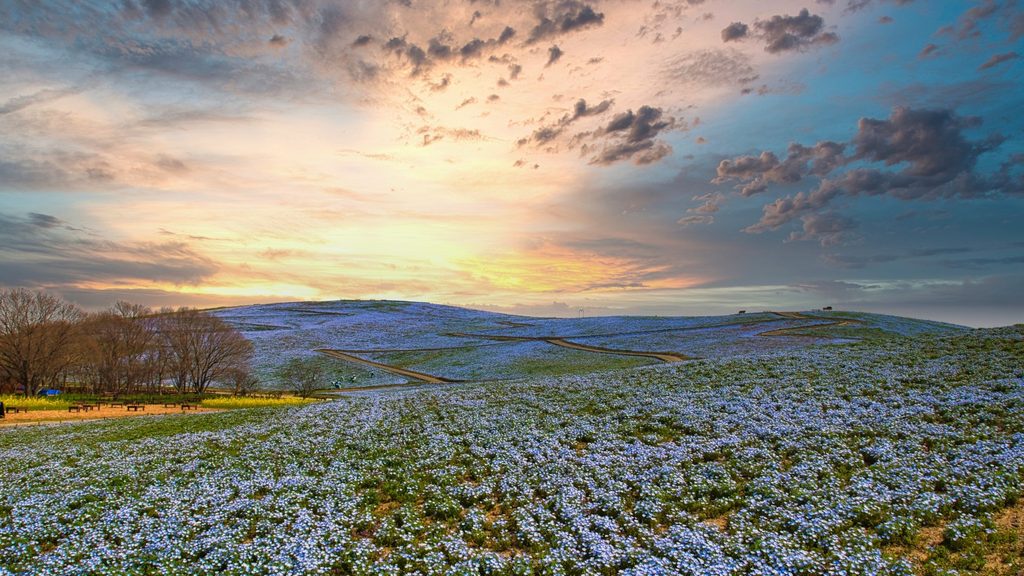
Cherry blossoms may be Japan’s best-known sign of spring. Yet about ninety minutes northeast of Tokyo, another kind of spring appears on a hill close to the Pacific Ocean—one painted almost entirely in blue.
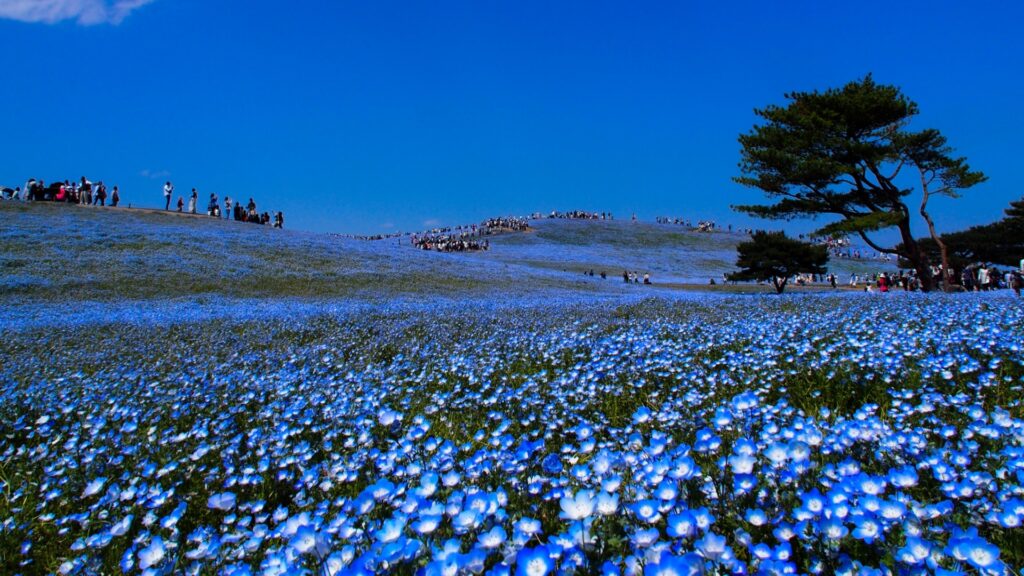
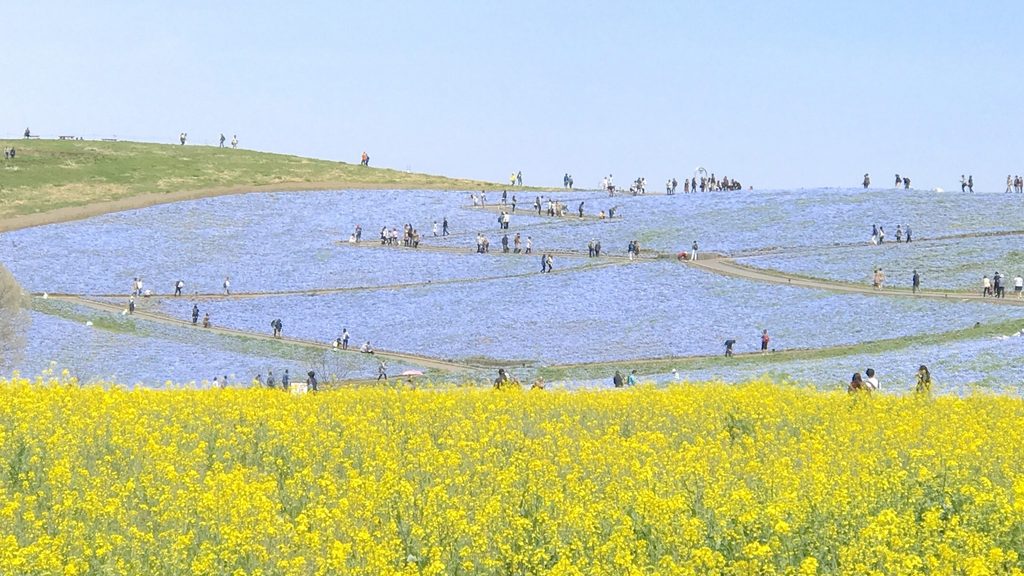
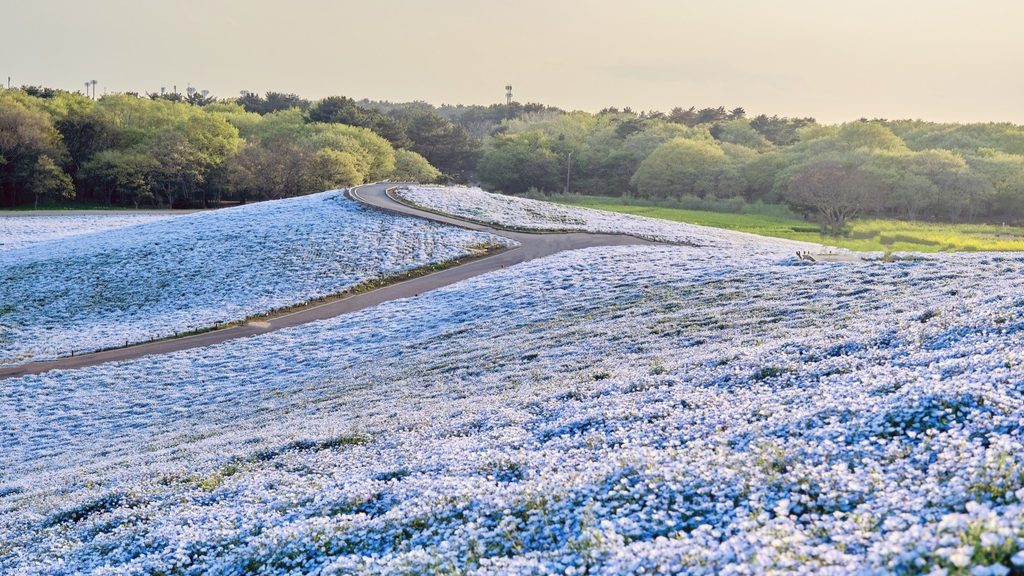
This is Hitachi Seaside Park in Hitachinaka, Ibaraki Prefecture. Each spring, around 5.3 million nemophila cover Miharashi Hill, creating a landscape in which the flowers seem to dissolve into the sky and, beyond it, the sea.
It is no longer a hidden place. On fine weekends and during Japan’s Golden Week holidays, the hill can be extremely busy. You should not come expecting to have the flowers to yourself. But if you check the latest flowering updates, arrive as early as you reasonably can, and continue beyond the famous hill, the park becomes much more than a single photograph.
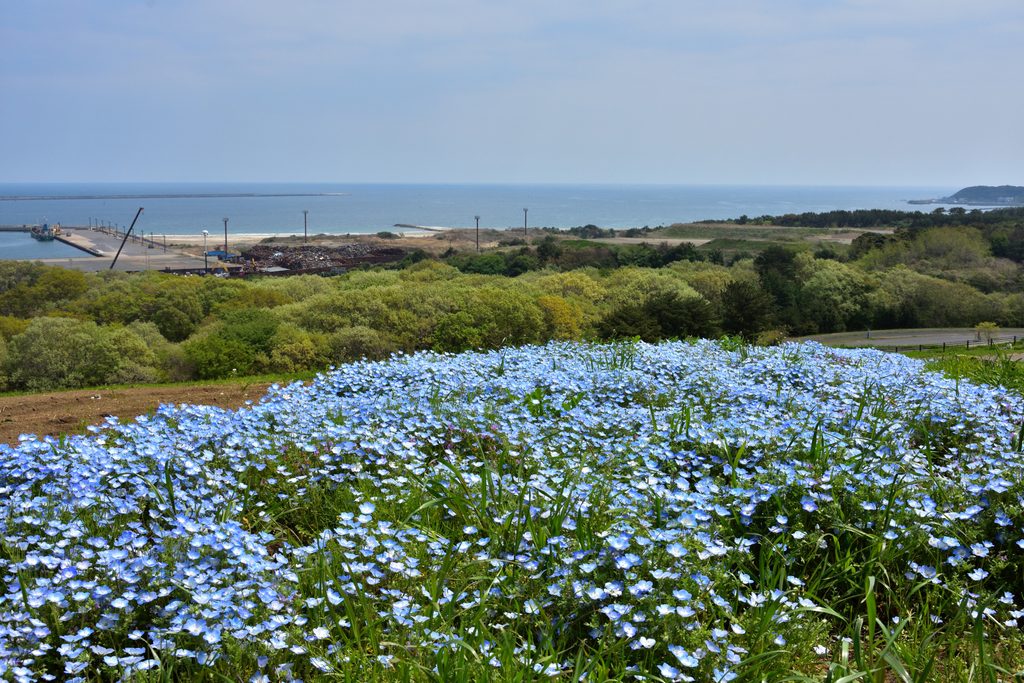
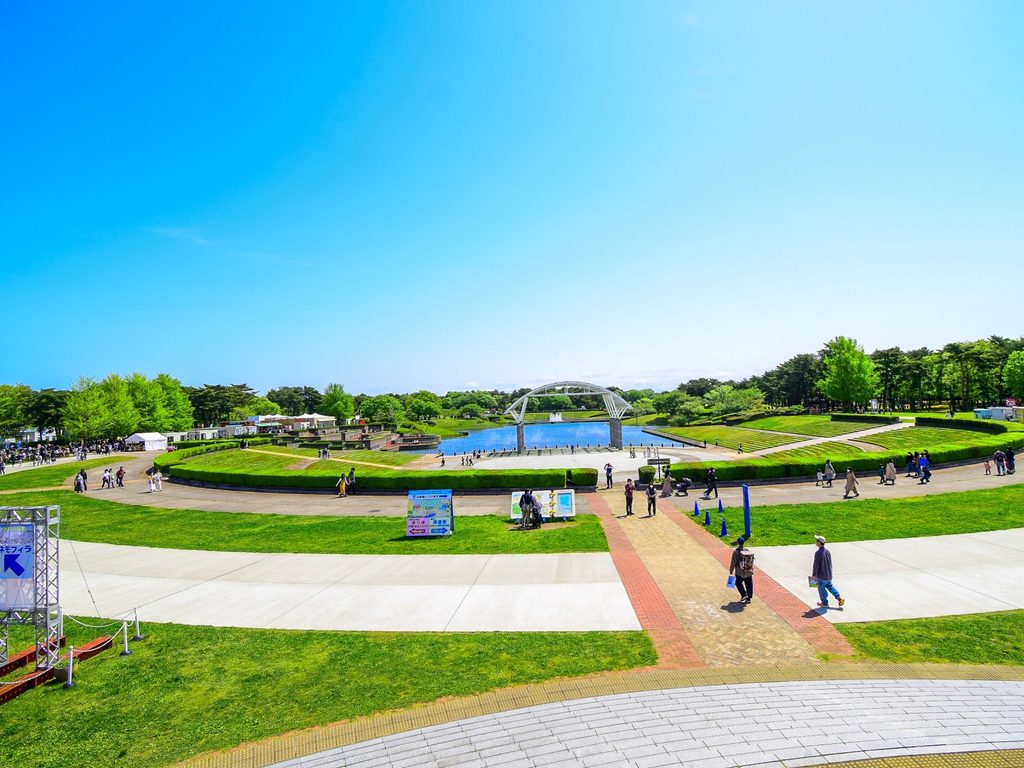
Beyond the blue hill are old farmhouses framed by yellow rapeseed flowers, tulips beneath the trees, quiet pine woods, broad lawns, and a glass-walled café overlooking the Pacific. There is also plenty of casual food for a spring picnic. Although the park can be visited as a day trip from Tokyo, it is large enough to deserve a full, unhurried day.
At a Glance
| Location | Hitachinaka, Ibaraki Prefecture, at Hitachi Seaside Park |
| Usual nemophila season | Mid-April to early May. The peak changes each year with the weather |
| Main sights | Nemophila on Miharashi Hill, old farmhouses and rapeseed flowers in Miharashi no Sato, tulips in Tamago no Mori, pine woods, lawns, and the coastal side of the park |
| Gateway from Tokyo | JR Katsuta Station, about 85 minutes from Tokyo Station by limited express train |
| From Katsuta Station | Bus from the East Exit to the park’s West Entrance; normally about 15 minutes, longer in heavy traffic |
| Time to allow | Around 5–7 hours for a full visit |
| Best for | Flowers, landscape photography, walking, picnics, and travelers who enjoy seeing a famous place at a gentler pace |
Official website · Open in Google Maps
Begin with the Blue Hill
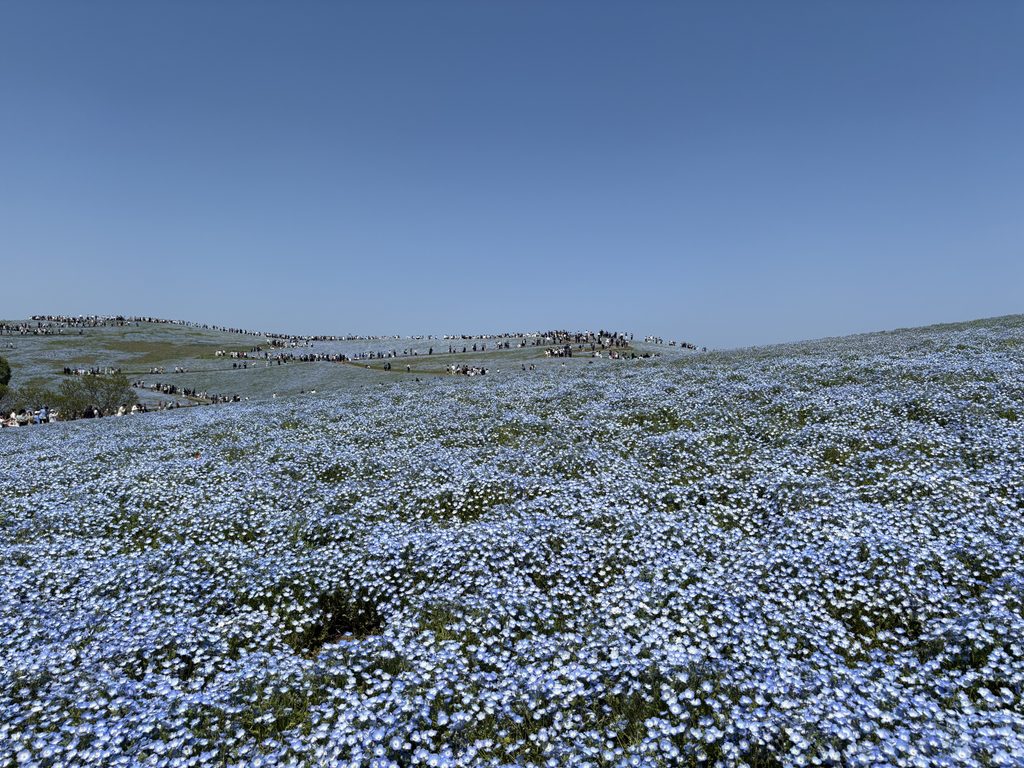
After entering through the West Entrance, make Miharashi Hill your first destination. During nemophila season, many other visitors will be walking in the same direction, so the route is usually easy to follow. Still, the park is much larger than it appears in photographs. The hill is not immediately beside the gate, and comfortable walking shoes are essential.
Up close, each nemophila is a small, delicate flower, pale blue with a white center. Seen across the hillside, however, millions of them change the color of the landscape. At your feet are individual petals; a little farther away, they become a blue haze. From higher on the hill, the flowers meet the sky and the distant Pacific.
For photographs, try leaving some of the hill’s curve, the sky, and even a few people on the path in the frame. Visitors give the landscape scale. They also tell the truth: this is a beloved seasonal sight, not a private field discovered by chance.
The usual viewing season runs from mid-April to early May, but the dates are not fixed. In a warm spring, flowering may advance quickly, and the hill may already be past its peak by the time Golden Week arrives, look at the park’s current nemophila report and date-stamped photographs.
How to Find a Slower Moment at a Famous Place
The most realistic strategy is to visit on a weekday and arrive for opening time after confirming the bloom. Even then, do not assume the hill will be quiet. The flowering period is short, and many people are waiting for the same combination of blue flowers and clear sky.
On selected peak-season dates, the park sometimes opens at 7:00 a.m. These early openings are not held every day, and the dates are announced separately each year. Another important detail is that special direct buses from Katsuta Station may begin later than the early opening time. If being at the gate at 7:00 matters to you, stay near Katsuta Station the night before and arrange a taxi, or use an early train-and-shuttle connection only after confirming that year’s timetable.
A normal day trip from Tokyo is still worthwhile. The key is not to remain on the same crowded slope for hours. See the nemophila first, then let the rest of the park gradually draw you away from the main flow of visitors.
Step into Japan’s Rural Past
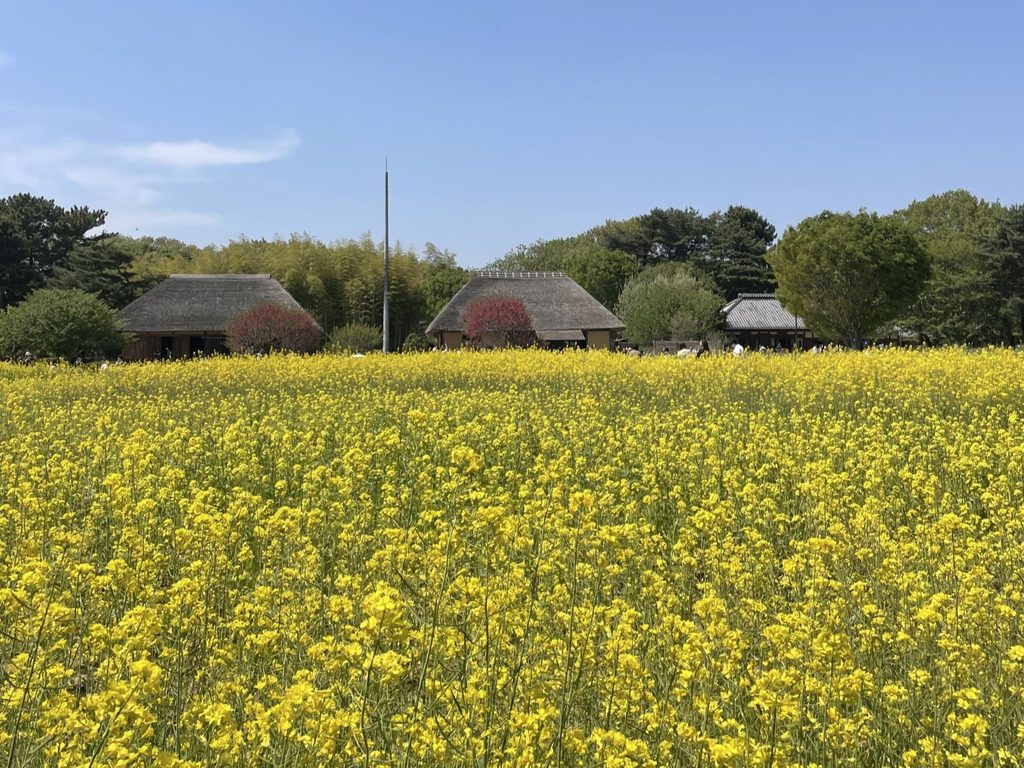
At the foot of the hill is Miharashi no Sato, an area designed to evoke the atmosphere and daily life of a traditional farming village.. Old farmhouses stand beside fields planted with seasonal crops and flowers. In mid to late April, yellow rapeseed blossoms often brighten the view in front of the dark wooden buildings.
The farmhouses are not merely scenery. Visitors can step inside and look at the rooms, timber frame, earthen-floored spaces, and the way the interior was arranged. Together, these details offer a tangible glimpse into rural life in the past—how families shared the rooms, how work and domestic life occupied the same space, and how an ordinary day unfolded inside the house.
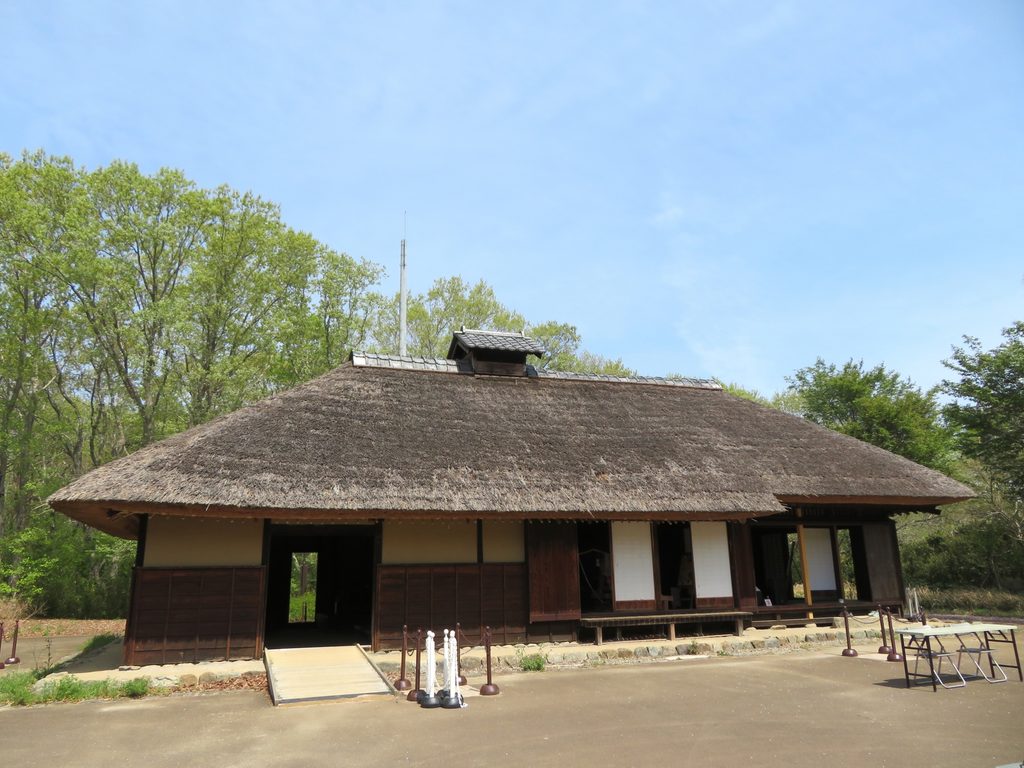
After the scale and color of Miharashi Hill, the quieter tones of timber, earth, and thatched roofs feel especially grounding. Take time to notice the shade beneath the eaves and the relationship between the houses, gardens, and fields. The nemophila show the season; the farmhouses suggest the lives once shaped by this landscape.
Can You See Nemophila, Tulips, and Rapeseed Flowers Together?
Often, yes—but never with absolute certainty.
The park gives the usual viewing period for nemophila as mid-April to early May. Tulips in Tamago no Mori and rapeseed flowers in Miharashi no Sato are usually at their best from mid- to late April. A visit during the second half of April therefore offers a good chance of seeing all three in one day.
Their exact peaks do not always coincide. A spell of warm weather can move one display ahead of another. Check the individual flower reports shortly before visiting rather than assuming that every field will be in full bloom.
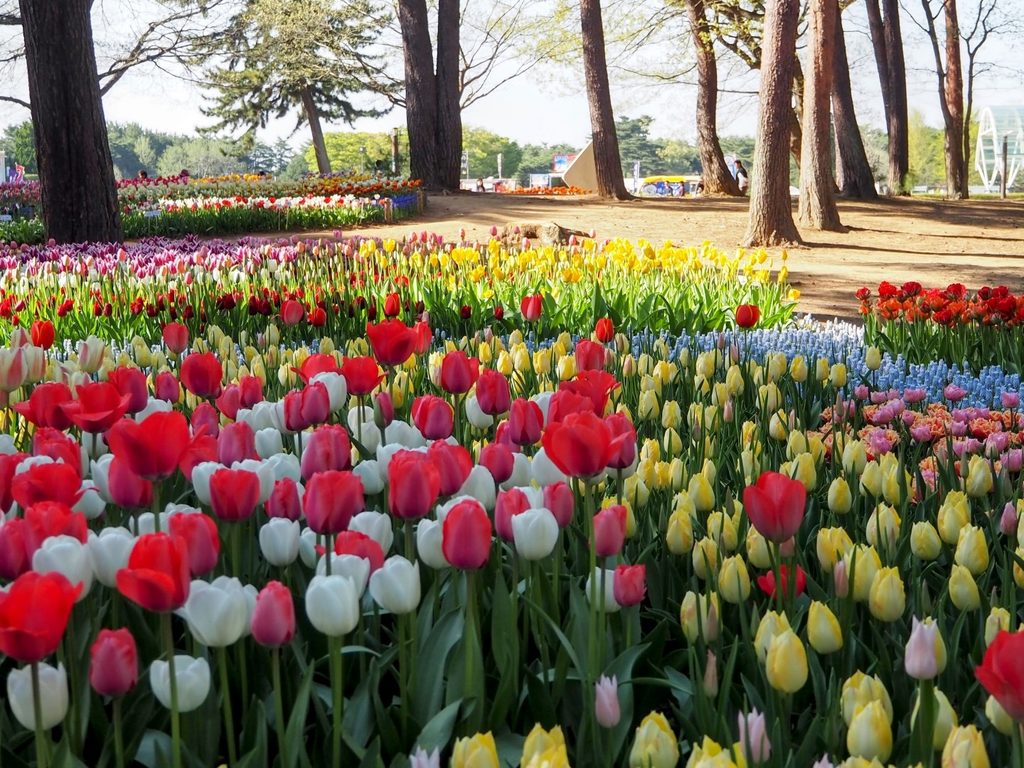
The setting of the tulips is very different from Miharashi Hill. In Tamago no Mori Flower Garden, red, yellow, white, purple, and delicately patterned tulips spread beneath the trees. Sunlight filters through the leaves, creating a scene of color and shadow rather than an open sweep of blue. Seeing both on the same day is one of the reasons to give the park more than a morning.
Make Lunch Part of a Spring Picnic
Hitachi Seaside Park is too large to leave at midday simply to look for lunch near the station. It is more enjoyable to eat inside the park and continue exploring afterward.
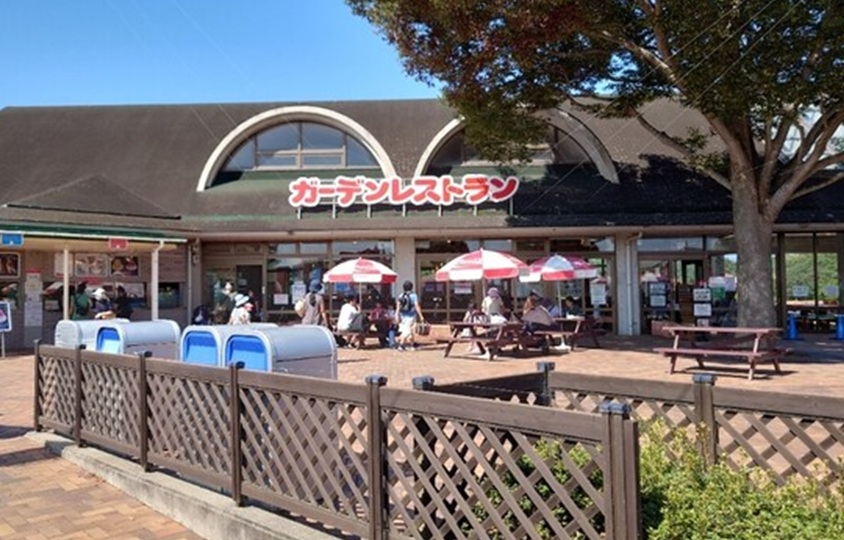
The Garden Restaurant in the Pleasure Garden area offers a range of meals, including Go! Go! Curry, while food stalls and mobile vendors sell casual choices such as smoked turkey legs, hamburgers, and crêpes. The exact stalls and opening days can vary, especially outside busy seasons, so check the park’s current food information when you arrive.
Rather than treating the park food as a formal restaurant experience, choose whatever appeals to you and find a bench or lawn for a relaxed picnic. It is a glimpse of how many people in Japan spend a spring day in a large public park: walking, sharing snacks, and resting beneath an open sky.
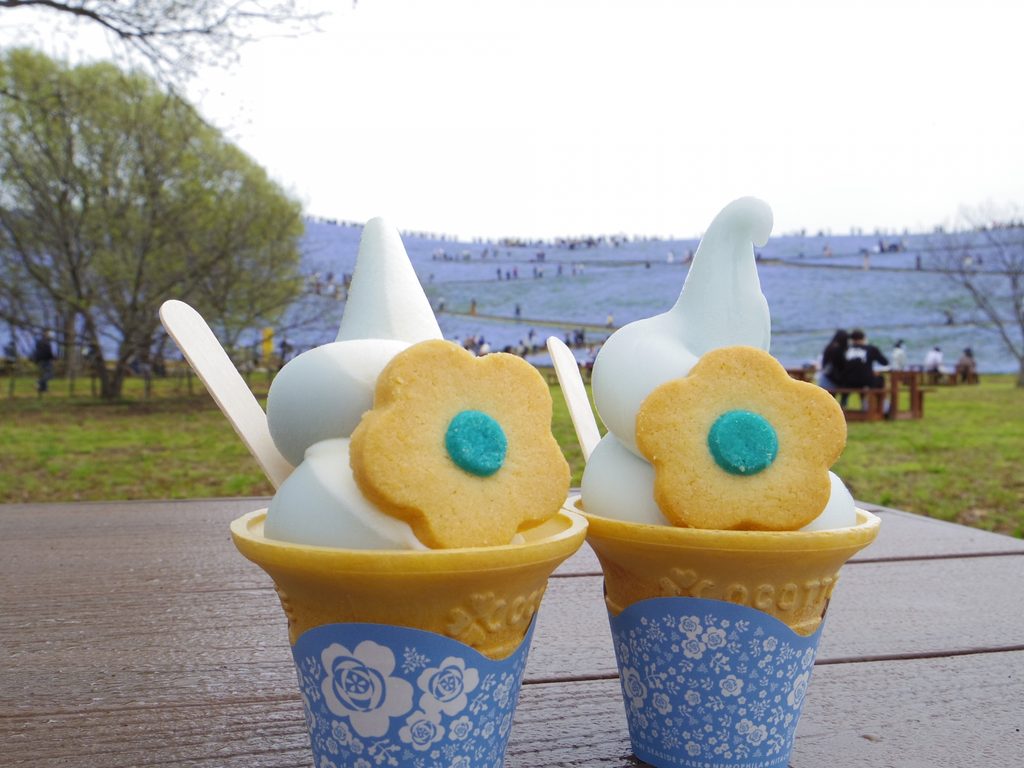
The seasonal sweet to remember is the Nemophila Blue Soft Serve. Its pale blue color and refreshing ramune flavor echo the flowers, and it comes with a handmade biscuit produced by a social welfare organization in nearby Mito. If you want a photograph, take it immediately—it melts quickly. Hold it against the blue hill or the sky, and the sense of place is complete.
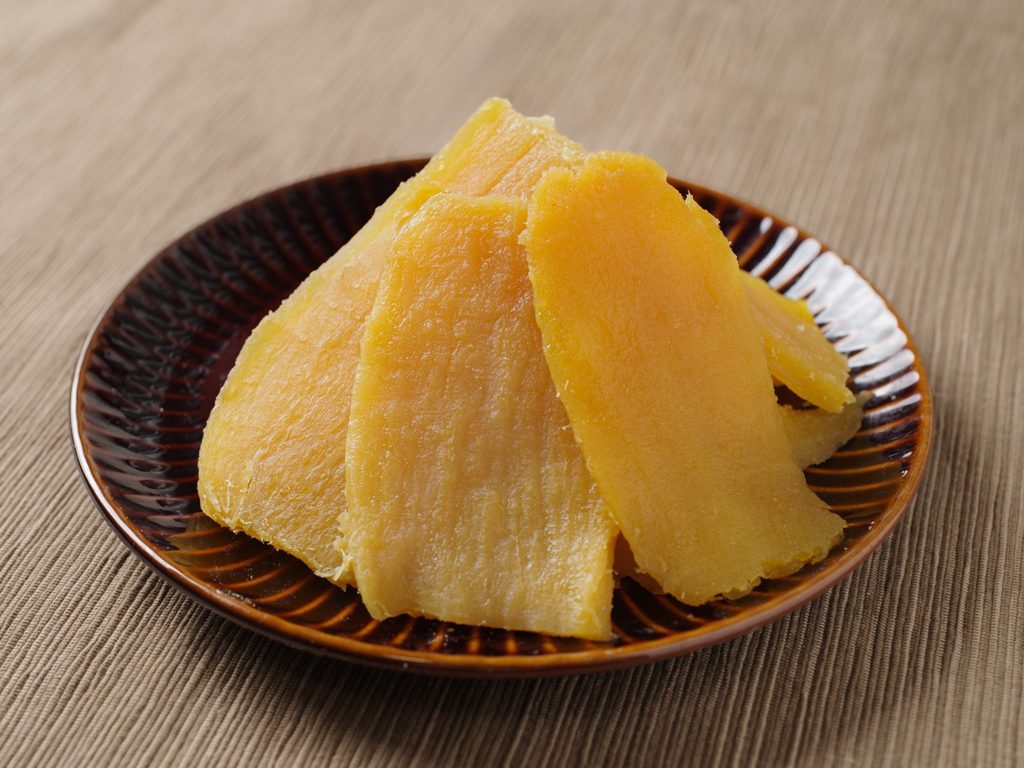
Hitachinaka is also one of Japan’s best-known areas for hoshi-imo, sweet potato that is steamed, sliced, and dried until naturally sweet and pleasantly dense. Inside the park you may find dried-sweet-potato gelato, tarts, doughnuts, and, in season, the dried sweet potato itself. The blue soft serve belongs to the spectacle of the flowers; hoshi-imo belongs to the agricultural life of the region. Together, they give the park’s food more local meaning than a typical collection of snacks.
Continue from the Flowers toward the Pacific
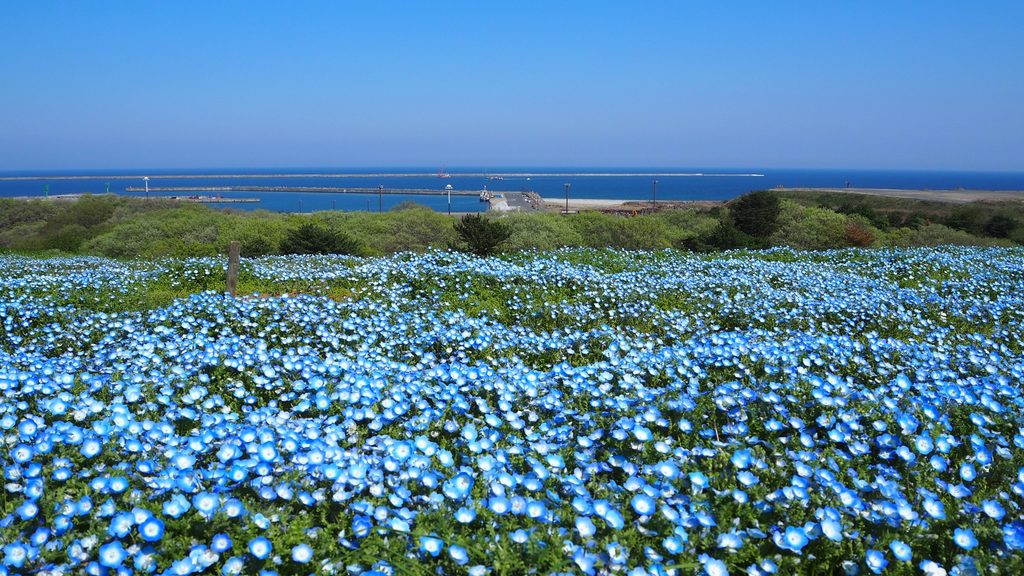
After lunch, walk through the tulips, pine woods, and open lawns before continuing toward the coastal side of the park. The distances are considerable. Trying to reach every corner on foot can turn a gentle day into an endurance test, so use the Seaside Train or a rental bicycle when it helps.
The glass-walled Glass House overlooks the Pacific and contains the Sea Side Café, where drinks and light food are served. It is a good place to rest after the brightness and movement of the flower fields. Here, the dominant colors are again sea and sky. The blue of the morning begins to feel less like a floral display and more like part of the wider coastal landscape.
You do not have to complete every section of the park. If the weather is poor or your legs are tired, spend longer on the lawns or in the wooded areas instead. The point is not to collect every attraction. It is to find one quieter moment beyond the famous hill.
Return to Katsuta for a Warm Evening Meal
In the late afternoon, take the bus back to Katsuta Station. Beside the ticket gates is a branch of Koda Shoten, where you can buy Hitachinaka hoshi-imo as a practical local souvenir. If you plan to take food abroad, check the import regulations of your destination country first.
For dinner, Kamado Rice and Sake Beiju is exceptionally convenient. It is on the ground floor of Terrace Inn Katsuta, immediately beside the station’s East Exit. The restaurant serves freshly cooked rice, grilled fish, and charcoal-grilled dishes in a warm, contemporary Japanese interior. It also uses smoked soy sauce from Kurosawa Shoyu, a local brewery in Hitachinaka.
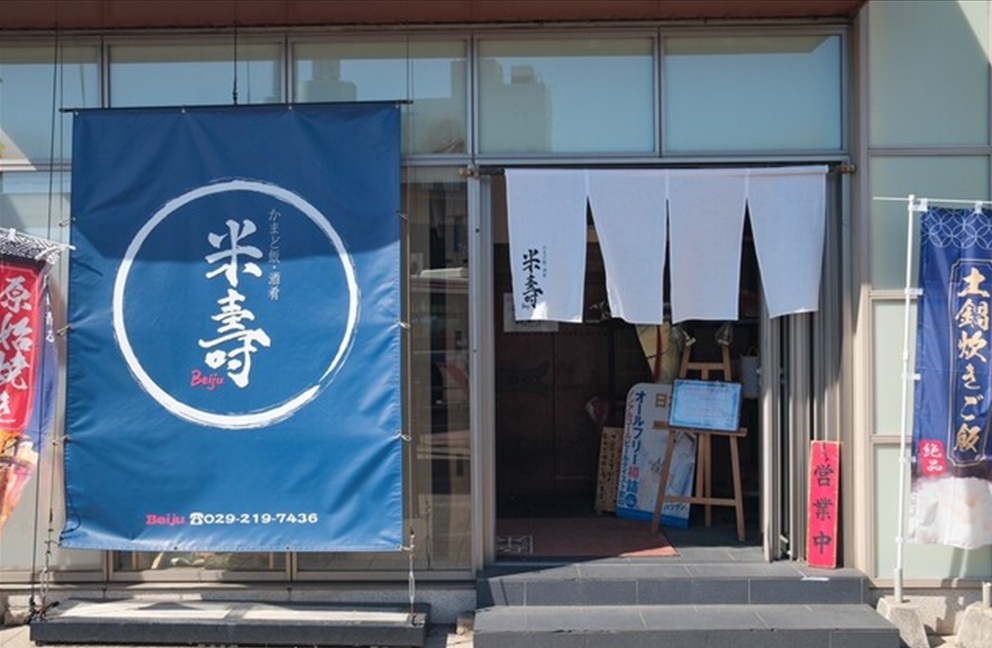
Beiju accepts online reservations through its official website. For a normal day trip, reserve an early dinner after the park. If you stay overnight for an early opening, it can instead become dinner on arrival or lunch after your morning visit.
Official website · Open in Google Maps · Book online
Access from Tokyo
From Tokyo Station, take a JR Joban Line limited express to Katsuta Station. The journey takes about 85 minutes. From the East Exit at Katsuta, a bus normally reaches Hitachi Seaside Park’s West Entrance in about 15 minutes, although traffic during the flower season can add considerable time.
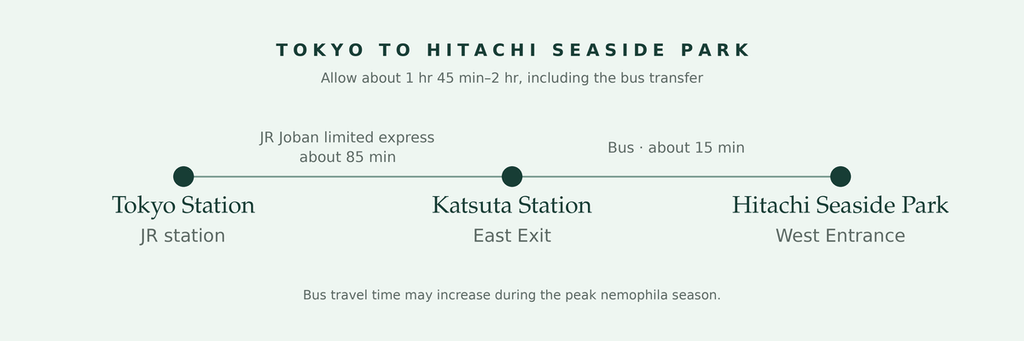
Check the park’s official train and bus information for your date. Seasonal direct buses, temporary services, boarding points, and timetables may change. If you are traveling during the peak bloom or Golden Week, allow extra time and reserve your limited-express seat where possible.
Useful map: Hitachi Seaside Park on Google Maps
A Full-Day Itinerary from Tokyo
This example assumes the regular 9:30 a.m. opening. Train and bus times, park hours, and restaurant availability must be checked for your actual date.
| Approximate time | Plan |
|---|---|
| Around 7:00 | Leave Tokyo Station on a JR Joban Line limited express for Katsuta |
| 8:30–9:00 | Take a bus from Katsuta Station East Exit to the park’s West Entrance |
| 9:30–11:00 | See the nemophila on Miharashi Hill |
| 11:00–12:00 | Visit the farmhouses and rapeseed flowers in Miharashi no Sato |
| 12:00–13:00 | Picnic-style lunch and Nemophila Blue Soft Serve near the Pleasure Garden |
| 13:00–14:00 | Walk through the tulips in Tamago no Mori |
| 14:00–16:00 | Explore the pine woods, lawns, and coastal side; use the Seaside Train if helpful |
| Around 16:00 | Return by bus to Katsuta Station |
| 16:30–17:15 | Buy hoshi-imo and take a short rest near the station |
| Around 17:30 | Early dinner at Beiju |
| Around 19:00 | Limited express back to Tokyo |
This is deliberately a full park day. In the afternoon, decide whether to continue to the coastal area based on the weather, your energy, the park’s closing time, and the return-bus schedule.
Stay Overnight for the Blue Hill at Its Quietest
During the spring season, Hitachi Seaside Park normally opens from 9:30 a.m. to 5:00 p.m. On selected peak-season dates, however, the gates may open as early as 7:00 a.m. These special dates change each year and are usually announced with the park’s annual calendar, so check the official early-opening calendar before booking your stay.
Staying near Katsuta Station the night before is not simply a way to save travel time. It gives you a chance to reach Miharashi Hill while the morning light is still soft and before the largest waves of day-trippers arrive. The hill will not necessarily be empty, especially during Golden Week, but the experience can feel calmer and less hurried than arriving from Tokyo later in the morning.
Do not assume that the first public bus will match a 7:00 a.m. opening. Seasonal buses and temporary train connections vary from year to year. If entering as soon as the gates open matters to you, confirm the current timetable and consider reserving a taxi from Katsuta Station.
Three Practical Hotels near Katsuta Station
| Hotel | Location | Why choose it |
|---|---|---|
| Terrace Inn Katsuta | Immediately beside the East Exit | The most convenient option for the park bus or an early taxi. Beiju is located in the same building |
| APA Hotel Hitachinaka Katsuta Ekimae | About a 6-minute walk from the East Exit | A modern, practical alternative with 176 rooms and quick checkout facilities |
| Hotel Life Inn Katsuta Station West | About 30 seconds from the West Exit | A simple station-side option. Allow a few extra minutes to cross the station for buses and taxis departing from the East Exit |
Whichever hotel you choose, compare the actual room rate for your date rather than assuming that one property will always be the least expensive. Prices can rise sharply when the nemophila are at their peak. If you plan to enter at 7:00 a.m., also check whether the hotel breakfast begins early enough—or buy something the night before and eat after reaching the park.
After an early visit, you do not need to rush back to Tokyo. Continue through the farmhouses, tulips, lawns, and coastal side of the park, then return to Katsuta for lunch or an early afternoon train. The advantage of staying overnight is not merely getting ahead of the crowd. It is beginning the day with enough time to let the blue hill become a landscape rather than a brief stop.
What to Check Before You Go
- The current nemophila bloom and date-stamped flower photographs
- Opening hours, early-opening dates, and scheduled closure days
- Admission fees and any seasonal surcharge
- Regular and seasonal buses from Katsuta Station, including the correct stop and boarding point
- Which restaurants, cafés, and food wagons will be open
- Operation of the Seaside Train and bicycle rentals
- Your return limited-express seat and, if needed, a reservation at Beiju
Spring conditions change quickly. Do not plan from an old timetable or assume that last year’s peak date will repeat. The park’s official updates are the most useful source in the days before your visit.
Beyond the Famous View
Miharashi Hill is not a quiet secret. That does not mean the experience has to be rushed or reduced to a crowded photograph.
Begin with the blue hill in the morning, then move gently away from the main flow. Step inside an old farmhouse. Walk beneath the trees among the tulips. Choose lunch from a food wagon and sit outside. Continue toward the Pacific, then return to Katsuta for warm rice and grilled fish as daylight begins to fade.
Placed within a whole day, the view changes. The nemophila become not only a field of blue flowers, but part of a wider spring landscape made of sea, farming, food, old houses, and the ordinary pleasure of spending a day outdoors.