Featured image: © Tokyo Convention&Visitors Bureau
Tokyo does not preserve its past in museums alone. In Yanaka and Nezu, traces of earlier centuries remain woven into ordinary streets: a vermilion shrine gate between neighborhood homes, a weathered wall built from clay and roof tiles, a cemetery path shaded by cherry trees, and a shopping street lined with small food shops.
A half-day here is not about rushing between headline attractions. It is about moving through several layers of the city at walking pace. The route begins among the trees and historic buildings of Nezu Shrine, passes through a temple district, pauses inside an old wooden house to paint a small lucky cat, and ends among the everyday shops of Yanaka Ginza.
Not everything in this neighborhood has survived unchanged from the Edo period. Buildings have been repaired or rebuilt, businesses have come and gone, and the city has continued to grow around them. What remains is not a perfectly preserved version of old Tokyo, but something more interesting: a place where historic spaces are still used, adapted, and woven into daily life.
If you have a free morning or afternoon in Tokyo, this is a walk that rewards curiosity more than speed.
Yanaka and Nezu at a Glance
| Location | Tokyo Metropolis — Nezu in Bunkyo Ward and Yanaka in Taito Ward |
|---|---|
| Best for | Shrines, local history, old streets, small shops, and hands-on cultural experiences |
| Starting point | Nezu Station on the Tokyo Metro Chiyoda Line |
| Ending point | Nippori Station or Sendagi Station |
| Walking time | About 3–4 hours without the craft experience |
| With the painting experience | Allow about 4–5 hours in total |
| Main costs | Transportation, food, shopping, and the optional maneki-neko painting experience |
| Good to know | Reach Yanaka Ginza after about 11:00 a.m., when more of its shops have opened |
Begin at Nezu Shrine
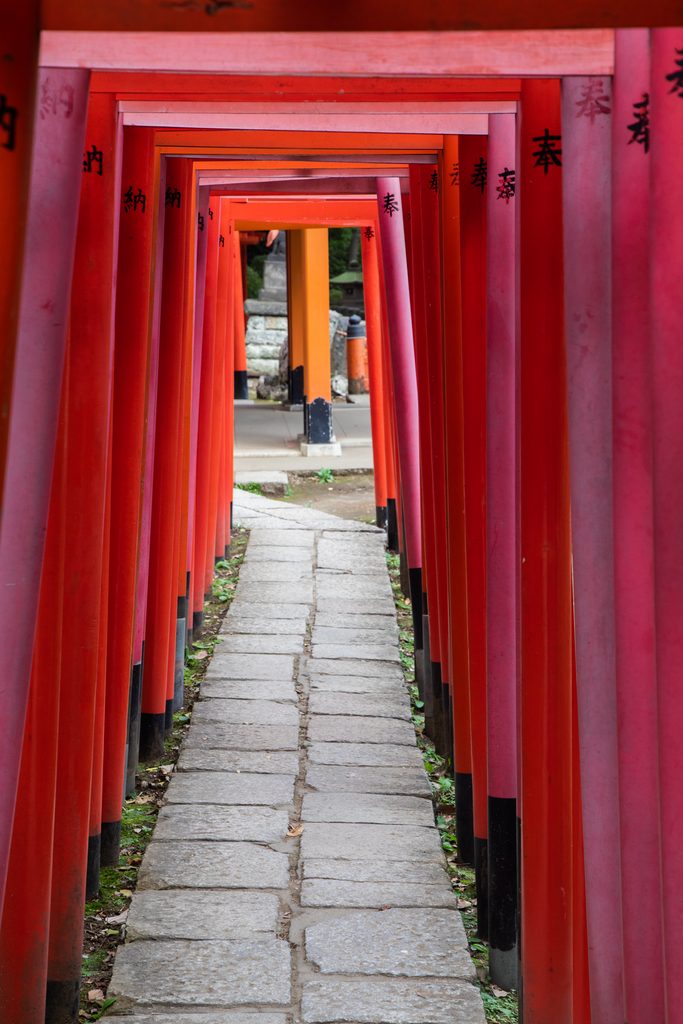
A few minutes from Nezu Station, the surrounding streets give way to the trees and vermilion architecture of Nezu Shrine.
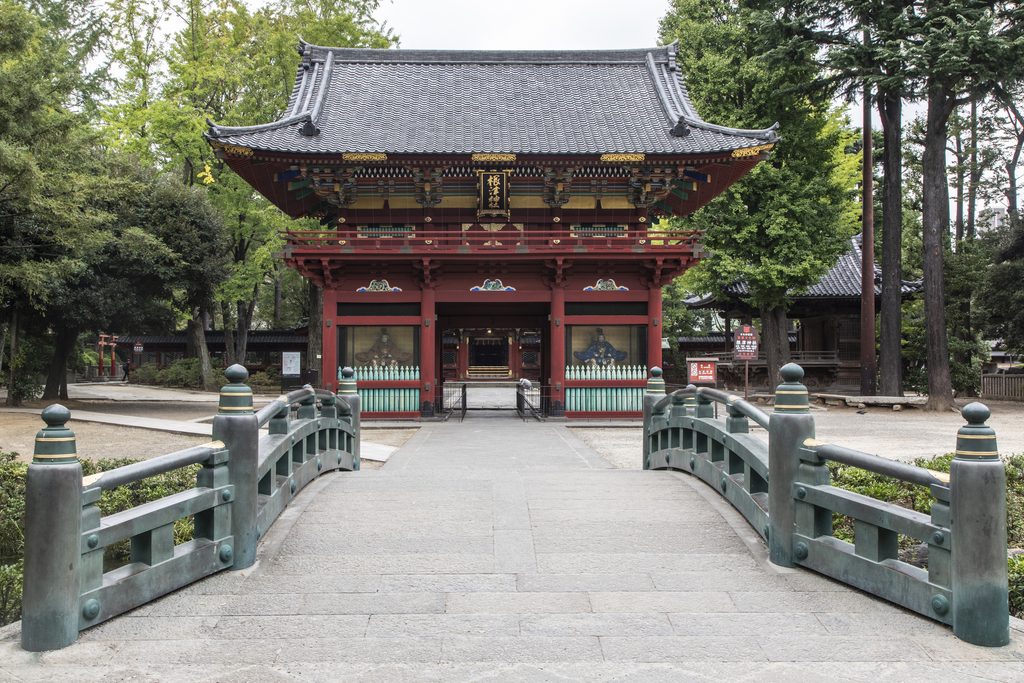
The shrine was moved to its present location in 1706, when its main buildings were constructed under the patronage of the Tokugawa shogunate. Its worship hall, gates, walls, and other structures form a rare surviving group of Edo-period shrine architecture in Tokyo. Vermilion, gold, dark timber, and deep green foliage overlap across the grounds, creating a scene that feels richly ornamented without losing its sense of calm.
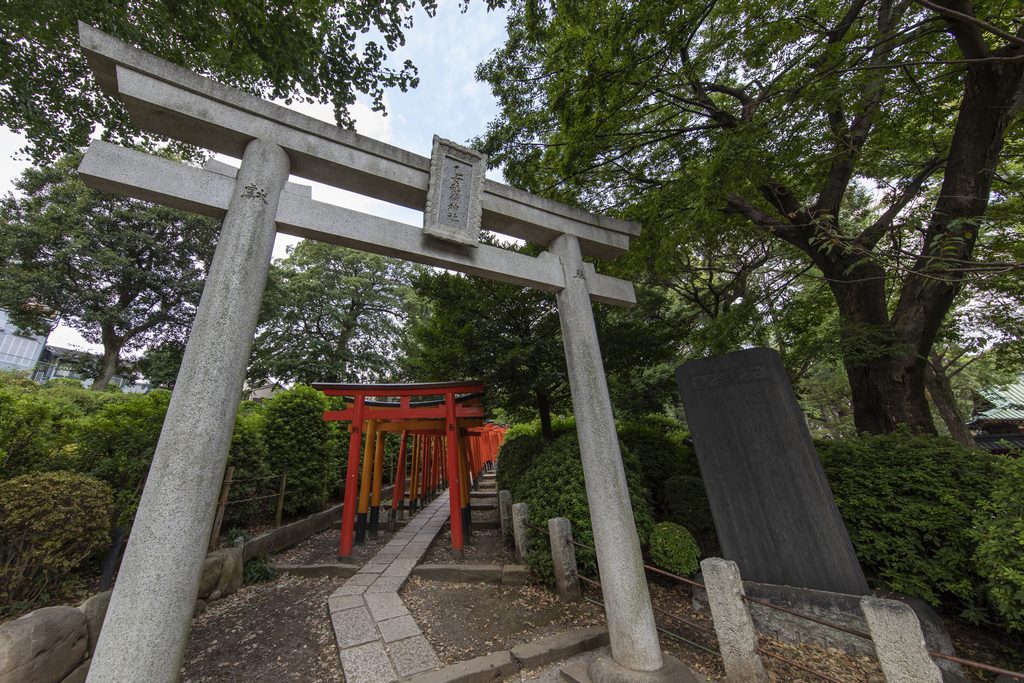
Walk through the two-story Romon Gate and toward the main sanctuary before exploring the smaller shrines within the grounds. On the slope beside the main precinct, a passage of red torii leads toward Otome Inari Shrine. The closely spaced gates are one of Nezu’s most photographed sights, but this remains an active place of worship, not a passage built for photography. Allow others to pray and pass, and avoid blocking the narrow path while composing a picture.
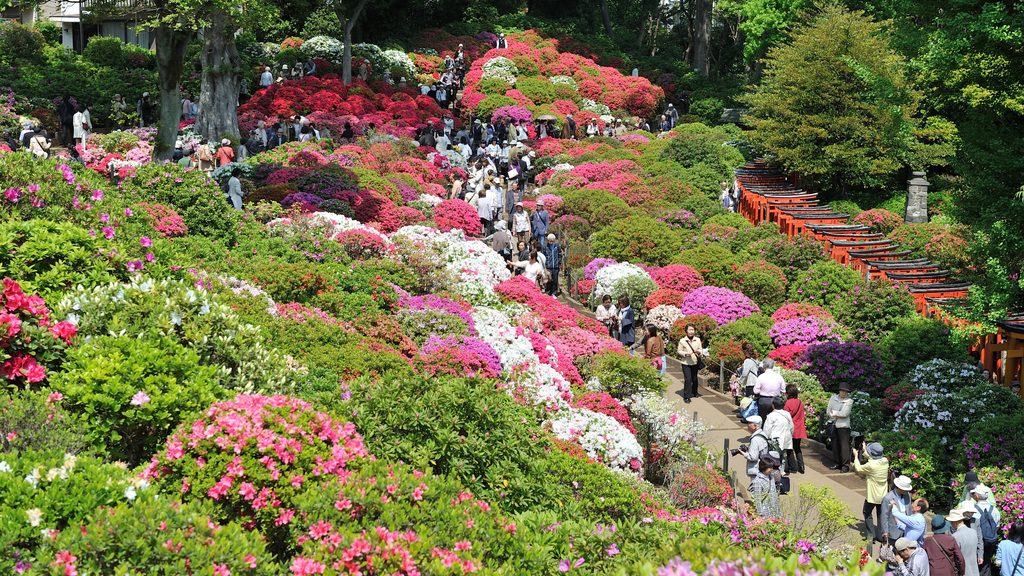
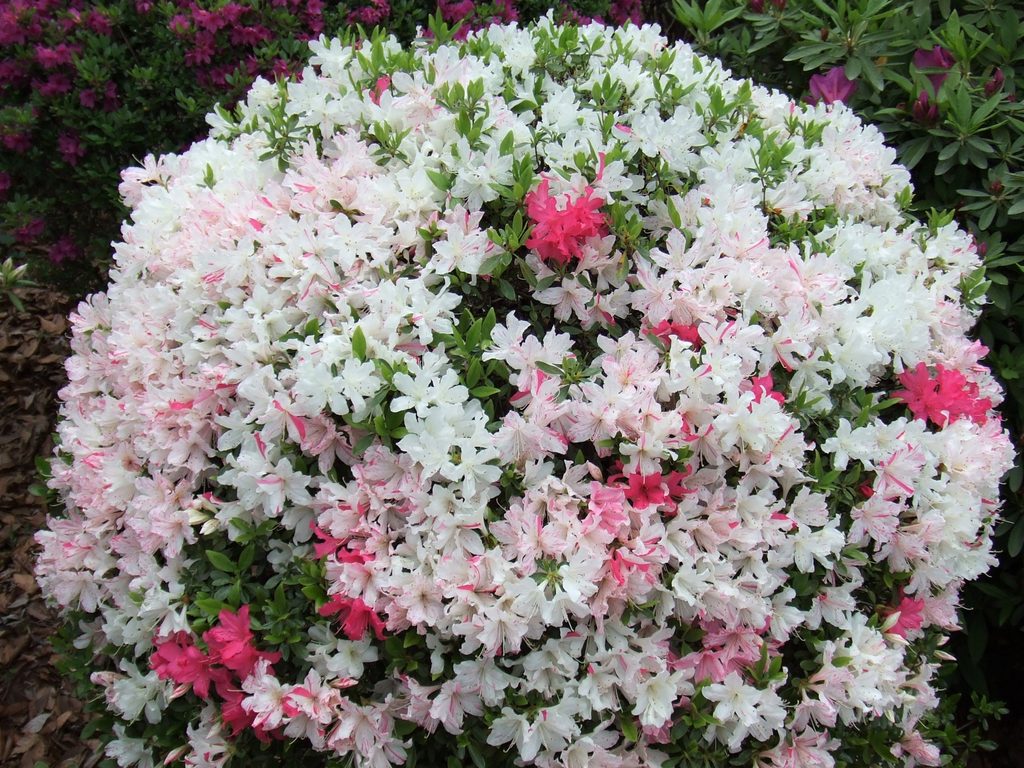
In spring, the shrine’s azalea garden opens for a limited season, covering the hillside with pink, white, red, and purple blossoms. Festival dates, admission details, and crowd-control measures vary with blooming conditions, so check the official azalea information before visiting. Outside the flowering season, the historic buildings, wooded slope, and quieter corners around the pond still make the shrine worth the walk.
© Tokyo Convention&Visitors Bureau
© Tokyo Convention&Visitors Bureau
Walk Into Yanaka’s Temple District
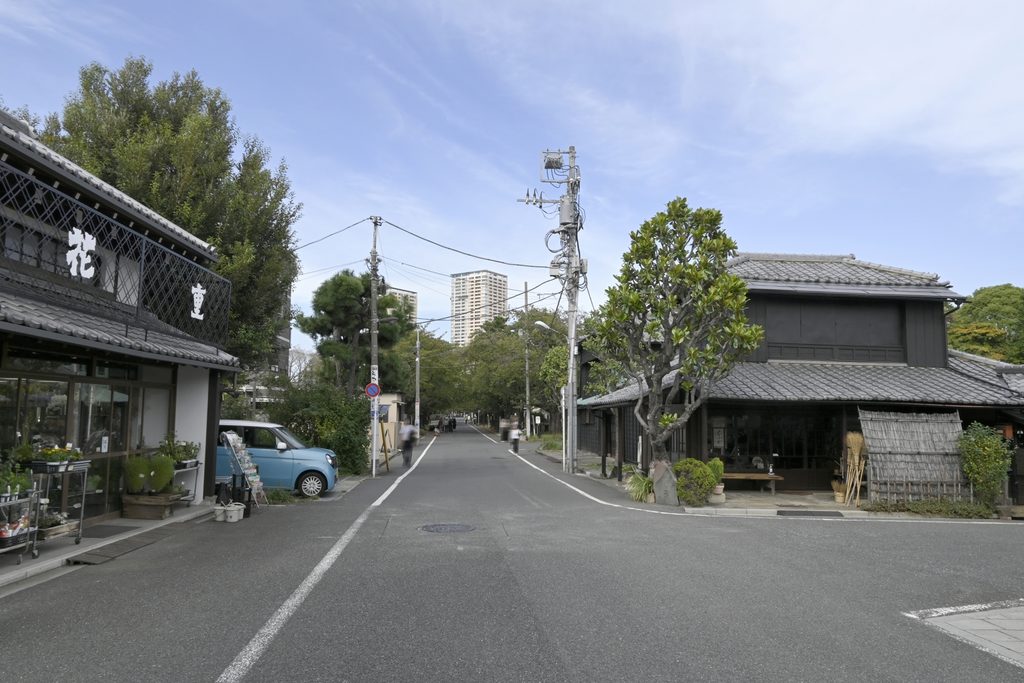
After leaving Nezu Shrine, the atmosphere changes gradually rather than all at once. The route toward Yanaka moves away from the wider road and into a neighborhood of low-rise homes, temple gates, potted plants, and small businesses. There may be no single landmark in front of you, yet the scale of the city begins to feel different.
Yanaka developed as a temple district over several centuries. As Edo expanded and fires reshaped the city, temples were relocated to this area, and their grounds helped define the pattern of the surrounding streets. Earthquakes, war, repairs, and redevelopment later changed the neighborhood again. It is more accurate to see Yanaka as a place of accumulated history than as an untouched fragment of the Edo period.
This part of the walk is also a reminder that an atmospheric street is still someone’s home. Photograph the shape of the lane, a temple wall, or greenery over a gate rather than treating private entrances, laundry, or residents as evidence of an “authentic” Japan. On narrow roads, step aside for bicycles, deliveries, and local pedestrians.
A Late-Edo Wall Beside an Ordinary Street
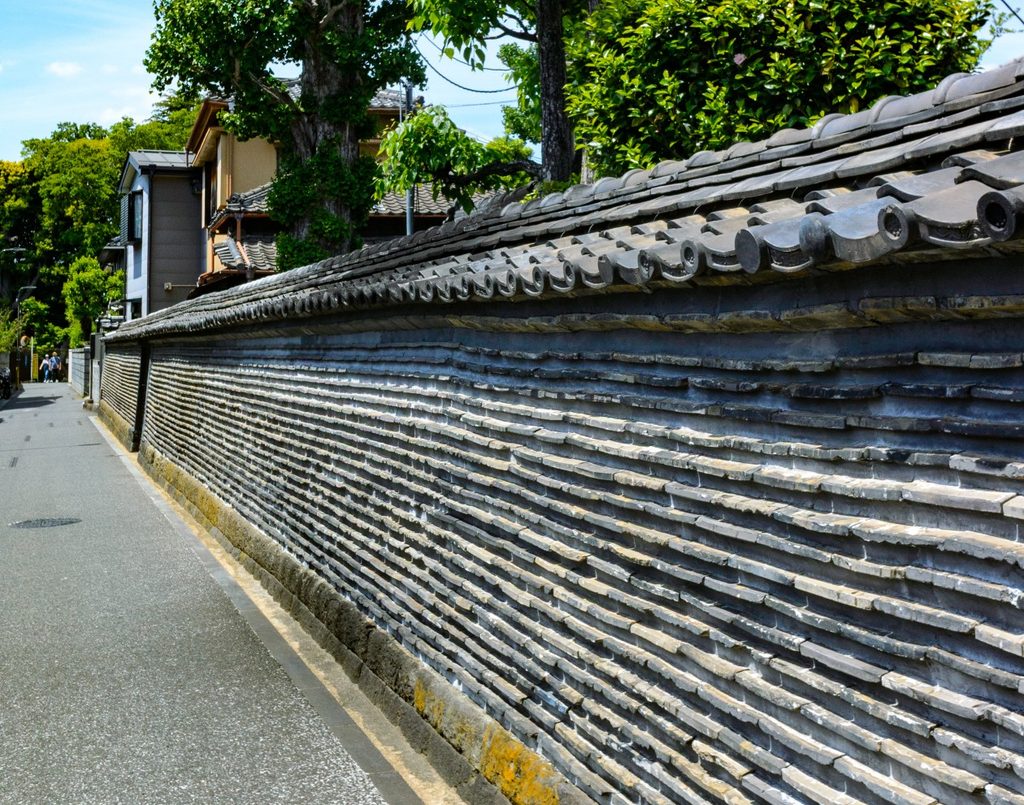
One of the smallest stops on this route is also one of its most revealing. Along the edge of Kannonji Temple stands a late-Edo-period tsuiji wall made by layering clay and roof tiles.
The wall, a registered cultural property, runs for approximately 37.6 meters. Its muted earth tones and repeated lines of tile are far less dramatic than a great temple gate, yet it makes the history of the district tangible. It is not isolated inside a formal heritage compound. Instead, it continues along a neighborhood lane, facing present-day homes as people pass by.
Look closely at the layered materials, then step back to see how the wall follows the street. It is a modest boundary, but it helps explain how temple grounds shaped Yanaka’s network of streets.
Please do not touch the wall or set equipment against it. The road is narrow, so take photographs without obstructing residents or other visitors.
Paint a Maneki-neko in a Traditional Wooden House
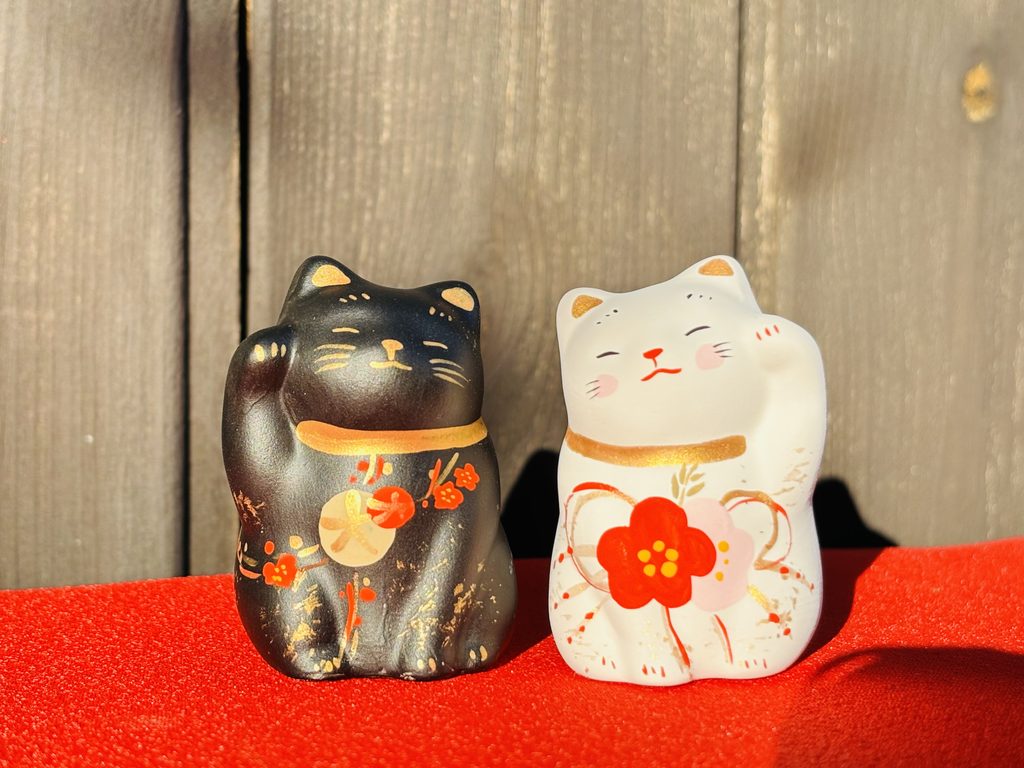
Just a short distance from the temple wall, Cafe Necoemon occupies a renovated wooden house more than 90 years old. Here, you can pause the walk and paint a small maneki-neko—the familiar Japanese cat with one raised paw, often associated with welcome and good fortune.
The experience begins with a blank, primed figure and a set of water-based markers. A sheet of paper is provided for sketching ideas first, and examples around the cafe offer inspiration if you are unsure where to begin. You might borrow colors from the shrine you have just visited, invent a pattern of your own, or paint the figure to resemble a cat you know.
The raised paw carries a traditional meaning. A cat raising its right paw is said to attract prosperity, while one raising its left paw is said to welcome people. The small figure is available with either paw raised; the large figure is offered only with the right paw raised.
The experience includes a drink and a baked sweet, so you can pause for a break while you work. Once the painting is finished, the cat is packaged with a small display cushion for the journey home. It becomes more than a souvenir bought from a shelf: it holds the colors you chose and the time you spent making it in Yanaka.
The activity feels especially fitting here. Yanaka is often associated with cats, but the appeal goes beyond a playful motif. A wooden house that has stood for more than 90 years now serves as a cafe where visitors can make something new. That gentle continuity—preserving, reusing, and adding another layer—is part of what makes the neighborhood compelling.
Maneki-neko Painting Details
| Location | Cafe Necoemon, 5-4-2 Yanaka, Taito City, Tokyo |
|---|---|
| Hours listed by the cafe | 11:00 a.m.–6:00 p.m. |
| Closed | Mondays; closed the following day when Monday is a national holiday |
| Small figure | ¥2,750, including tax; choose right or left paw |
| Large figure | ¥3,300, including tax; right paw only |
| Included | Figure, decorating materials, a drink, a baked sweet, a small cushion, and wrapping |
| Reservations | Walk-ins may be accepted when seats are available; email reservations are also offered |
| Language | The official website includes English guidance; spoken English support at the cafe has not been confirmed |
The cafe does not publish a standard completion time on its website. If this experience is important to your day, reserve in advance and ask how much time to allow. Plan on approximately four to five hours for the full route rather than trying to fit the activity into a rushed three-hour itinerary. Check the official pages for current prices, hours, and reservation details before visiting.
Cafe information · Painting experience · Google Maps
Walk Quietly Through Yanaka Cemetery
Yanaka Cemetery opened in 1874. Its grounds are interwoven with cemeteries belonging to temples such as Kan’eiji and Tennoji, bringing together Yanaka’s older religious landscape and the history of modern Tokyo.
In spring, cherry trees arch over the central avenue. At other times of year, the long paths and open sky create a quiet transition between the temple district and the busier streets ahead. Follow the public paths and look for the site of the former five-story pagoda, along with signs explaining the area’s history.
This is an active place of remembrance, not simply a scenic park. Do not photograph mourners, names on gravestones, or offerings without permission, and do not enter individual burial plots. A quieter voice and an unhurried pace are appropriate here.
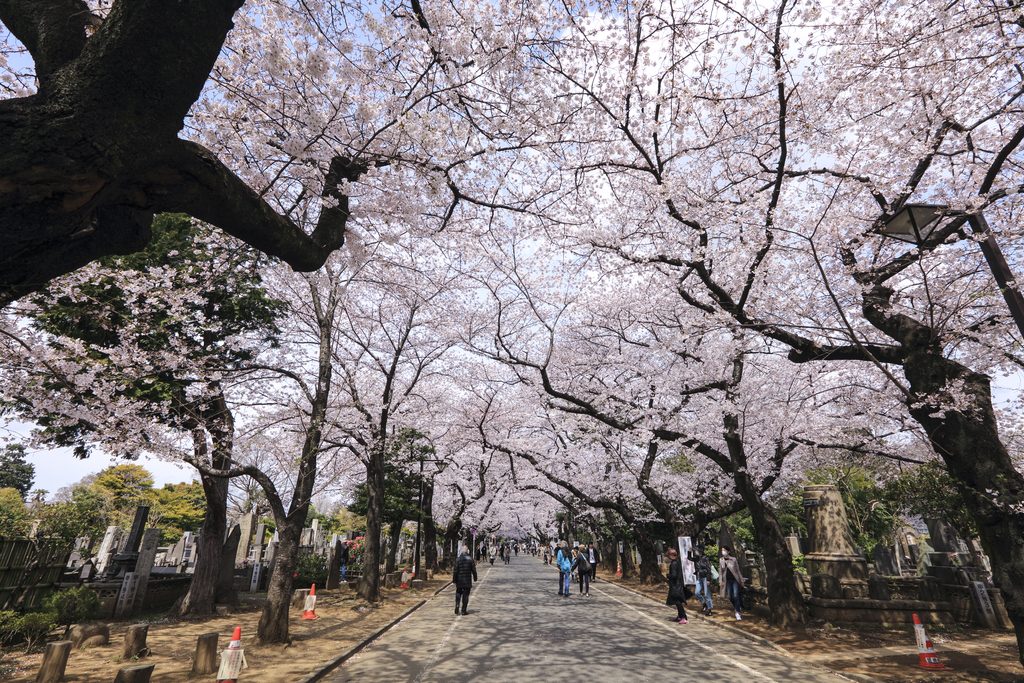
© Tokyo Convention&Visitors Bureau
From Yuyake Dandan to Everyday Yanaka
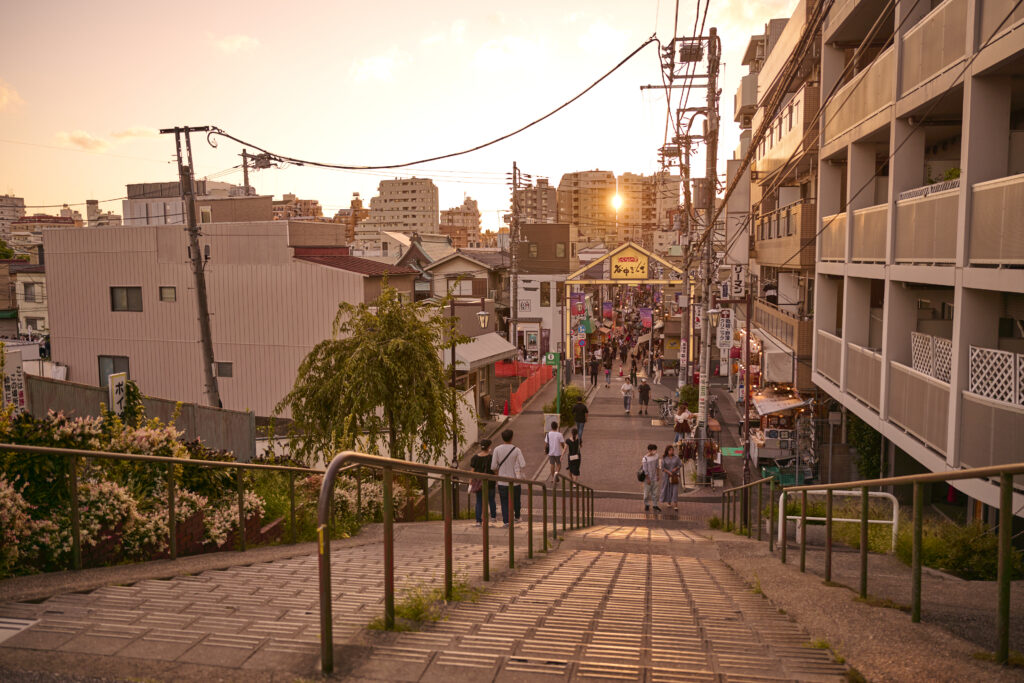
Near the end of the walk, the neighborhood changes character once again. From the top of Yuyake Dandan, a short flight of steps whose name evokes a sunset staircase, Yanaka Ginza stretches between low roofs and closely spaced storefronts.
The view is particularly attractive in the late-afternoon light, but the steps matter for another reason: they form a visible threshold between the quieter temple streets and a neighborhood shopping street shaped by daily commerce.
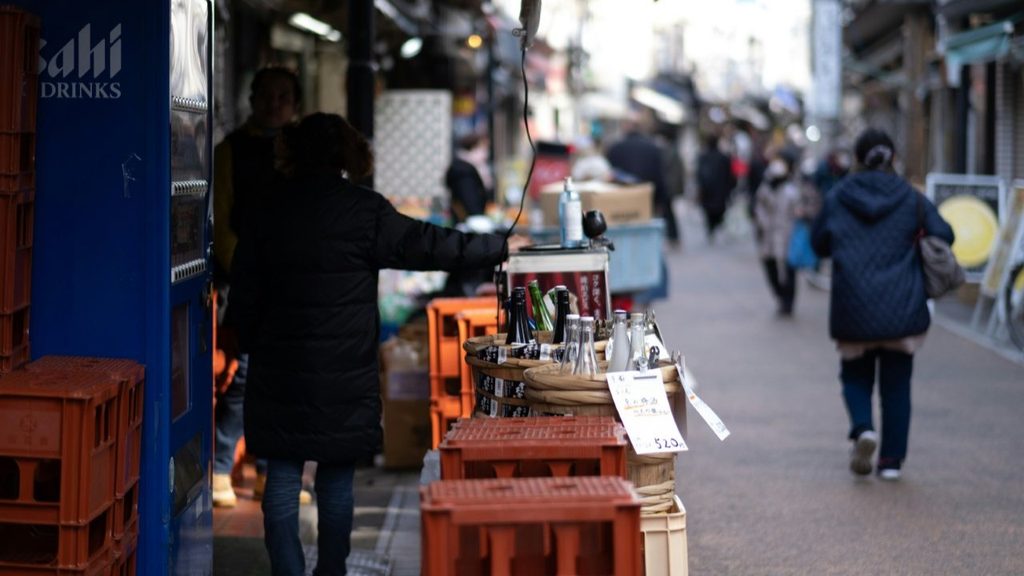
Yanaka Ginza is only about 170 meters long. Its shops sell prepared foods, fish, tea, sweets, clothing, ceramics, flowers, and household goods. Some are accustomed to visitors, while others continue to serve the practical needs of people who live nearby. After spending the morning exploring historic places, shopping here is a simple way to support the small businesses that sustain neighborhood life.
The street can be lively on weekends and in the afternoon, and its businesses do not all open at the same time. Early morning may be better for nearly empty photographs, but it is not the best time to experience the shops. For this route, aim to arrive after about 11:00 a.m.
Yuyake Dandan on Google Maps · Yanaka Ginza official website · Yanaka Ginza on Google Maps
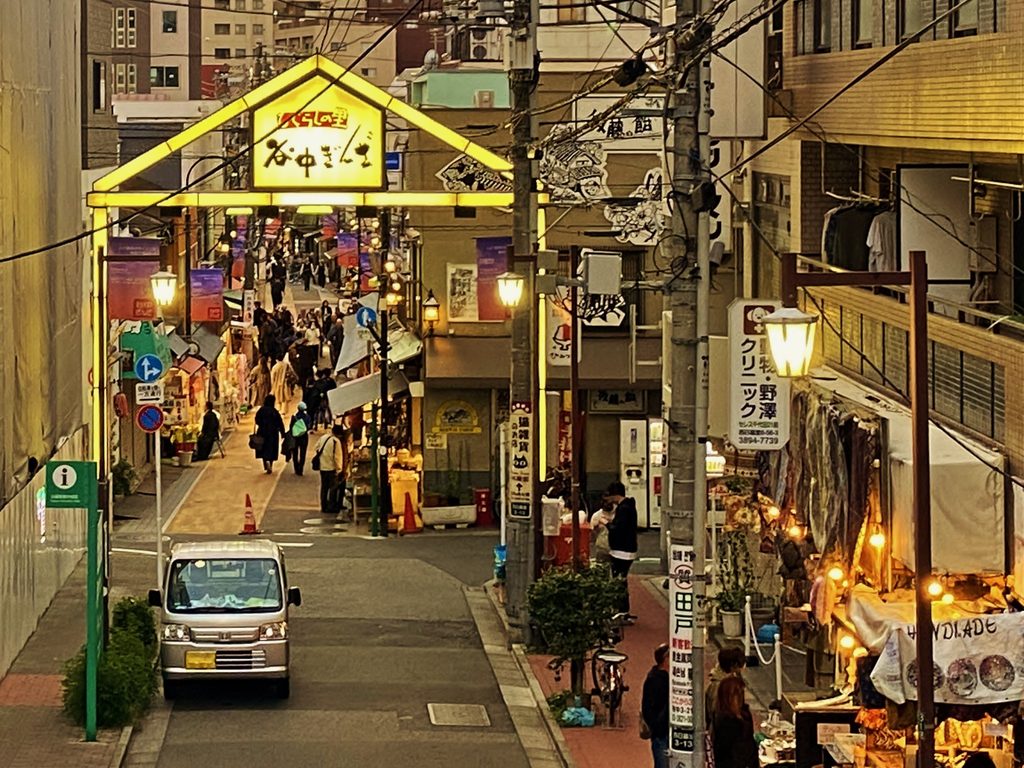
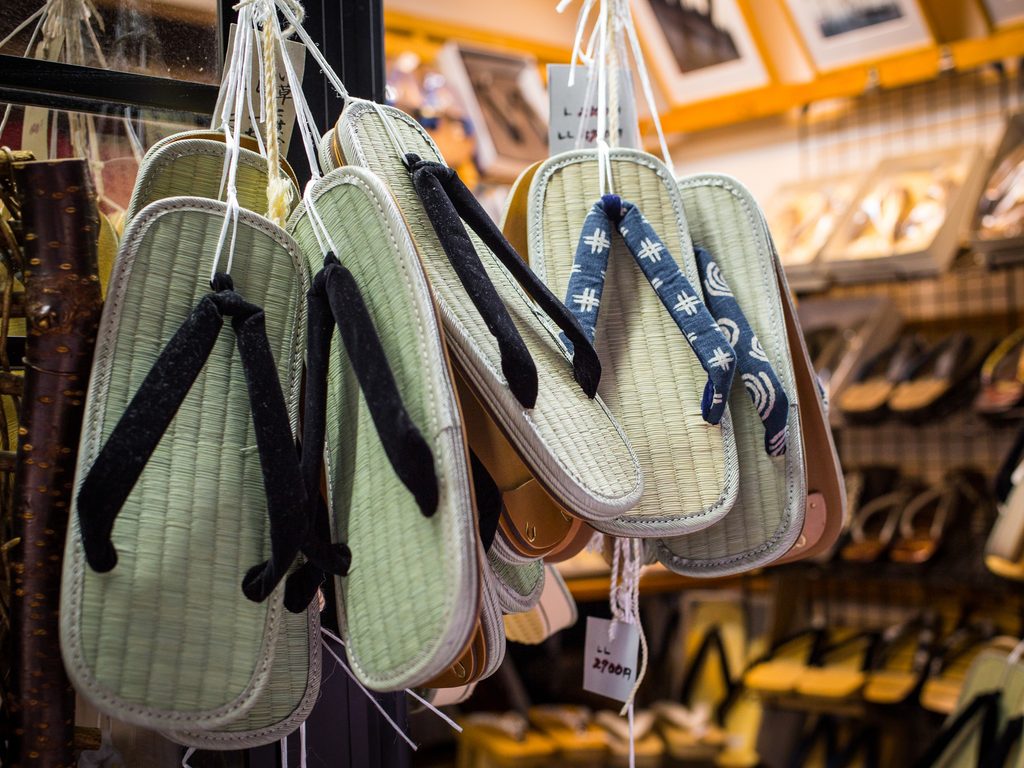
© Tokyo Convention&Visitors Bureau
Choose a Few Things to Eat Along Yanaka Ginza
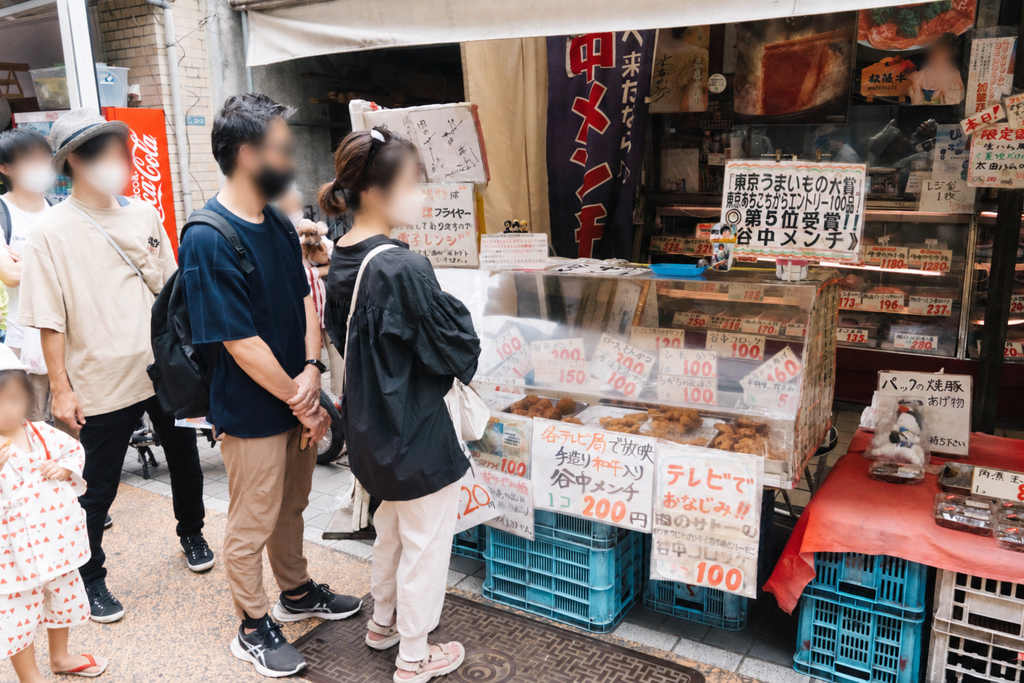
Photo: “Yanaka Ginza” by Dick Thomas Johnson, licensed under CC BY 2.0, via Wikimedia Commons. Faces blurred for privacy.
Rather than building this walk around a long restaurant meal, end with a few small tastes from Yanaka Ginza. Shops along the street sell croquettes and other fried foods, grilled chicken skewers, tempura, candy, and sweets. Choosing one or two things as you browse feels more in keeping with the character of the shopping street than planning the route around a single restaurant.
The shopping street’s official directory currently lists Niku no Suzuki and Niku no Sato for meat and prepared foods, Hatsuneya for tempura, and Yanaka Kobayashi for chicken and yakitori. Daily selections, frying times, and opening days may vary, so consider these examples rather than guaranteed stops.
For something sweet, options listed by the association include Goto no Ame for handmade candy and karinto, Waguriya for Japanese chestnut sweets, and Yanaka Kenshindo for mizu anmitsu. A savory snack followed by one small sweet can be enough to make the end of the walk feel complete without turning it into a restaurant itinerary.
“Street food” does not always mean eating while walking. Follow each shop’s guidance. If a business provides or recommends a place to eat, use it; otherwise, take your purchase away. Avoid stopping in front of neighboring stores or residential entrances, and dispose of packaging as directed by the seller.
A Sample Half-Day Route
Planning note: The schedule below is a guide, not an official estimate. It sets aside 75 minutes for painting because Cafe Necoemon does not publish a standard duration. Confirm how much time to allow when reserving.
| Elapsed time | Stop | What to do |
|---|---|---|
| 0:00 | Nezu Station | Begin the walk |
| 0:10–0:45 | Nezu Shrine | Pray, then explore the historic buildings and smaller shrines |
| 0:45–1:15 | Nezu to Yanaka | Walk through the side streets and temple district |
| 1:15–1:30 | Kannonji Temple wall | Look closely at the layered clay and roof tiles |
| 1:30–2:45 | Cafe Necoemon | Paint a maneki-neko; confirm the actual time when reserving |
| 2:45–3:15 | Yanaka Cemetery | Follow the public paths and visit the site of the former five-story pagoda |
| 3:15–3:35 | Walk to Yuyake Dandan | Watch the neighborhood shift from temples to shops |
| 3:35–4:25 | Yanaka Ginza | Browse, choose prepared foods or sweets, and shop locally |
| 4:25–4:45 | Walk to the station | Continue to Nippori or Sendagi Station |
If you skip the painting experience, the route can fit comfortably into about three to four hours. If you prefer a sit-down lunch, add extra time rather than compressing the shrine, craft experience, and cemetery into a tighter schedule.
Getting There and Leaving the Area
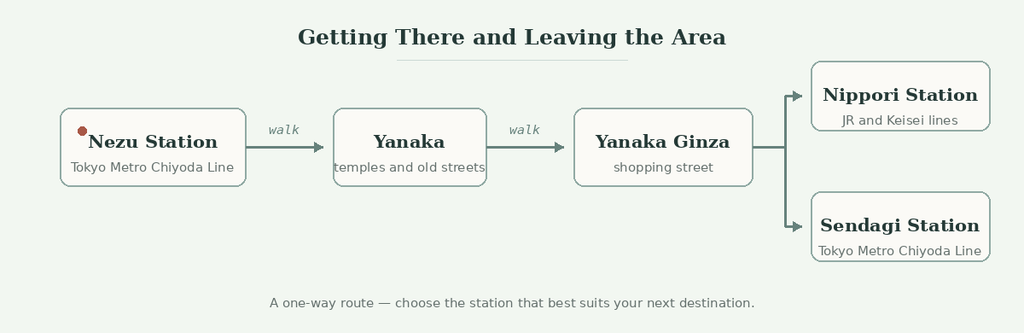
This route is designed as a one-way walk. Begin at Nezu Station on the Tokyo Metro Chiyoda Line, then continue through Yanaka without returning to your starting point.
From Yanaka Ginza, Nippori Station is the most convenient endpoint if you want to connect to JR lines. Sendagi Station is a useful alternative if you prefer to return to the Tokyo Metro Chiyoda Line. Choose the station that best suits your next destination.
When to Go
Yanaka and Nezu are not always quiet. Nezu Shrine becomes busy during the spring azalea season and on festival days. Yanaka Cemetery attracts more visitors during cherry blossom season, and Yanaka Ginza can be crowded on weekend afternoons.
On an ordinary day, visit Nezu Shrine in the morning and plan to reach Cafe Necoemon after it opens at 11:00 a.m. By the time you arrive at Yanaka Ginza, more of its shops should also be open.
Spring brings azaleas and cherry blossoms, while festival days add energy and ceremony to the neighborhood. On an ordinary day without seasonal flowers, however, it is easier to notice the details that give the area its character: shrine buildings, temple walls, narrow streets, workshops, and shops. Yanaka and Nezu are worth walking not only on their most photogenic days, but also without a festival or seasonal spectacle.
Travel With Respect
- Nezu Shrine, Kannonji Temple, and Yanaka Cemetery remain places of worship, ceremony, and remembrance. Worship and remembrance always take priority over sightseeing.
- At Nezu Shrine, photography is restricted inside shrine buildings, on parts of the stone approach, and in situations that disturb worshippers or staff. Check the shrine’s current photography guidance before your visit.
- In Yanaka Cemetery, avoid photographing names on graves, offerings, or mourners, and do not enter individual burial plots.
- On narrow streets, avoid walking side by side in a group. Do not use private entrances, gardens, or residential property as photo locations.
- At shops, ask before photographing staff or merchandise when permission is not clearly indicated.
- Follow each food shop’s guidance about where purchases may be eaten, and do not leave packaging behind.
What Remains After the Walk
The strongest memory of Yanaka and Nezu may not be one monumental view.
It may be the greenery beyond a vermilion gate, the rhythm of roof tiles pressed into an old earthen wall, the quiet breadth of a cemetery path, or the small painted cat wrapped carefully for the journey home. Later, the signs and voices of Yanaka Ginza return the walk to the present.
Together, these modest scenes reveal something larger about Tokyo. The city’s past does not survive only through buildings that have remained untouched. It also continues through places that are repaired, reused, visited with care, and folded back into everyday life.
To walk slowly through Yanaka and Nezu is to notice that continuity—and perhaps to carry a small piece of it home.